Table of Contents
- Planning Private Events for 40 Guests: Why Intimate Gatherings Need Different Logistics
- Venue Selection and Capacity: Finding the Right Space
- How to Budget for a Private Event
- Catering Ideas for 40 Guests: Menu Planning and Dietary Needs
- Event Planning Checklist for Small Groups
- Hiring Live Music for Private Parties
- Audio-Visual Setup, Accessibility, and Event Flow
- Post-Event Follow-Up and Sustainability Considerations
Last Updated: August 24, 2026
Planning Private Events for 40 Guests: Why Intimate Gatherings Need Different Logistics
Planning private events for 40 guests sits in a sweet spot, large enough to feel like a proper celebration, small enough that you can actually know everyone in the room. At Plonkers Wine Bar, we’ve hosted countless gatherings at this scale, and the difference between a memorable occasion and a logistical nightmare comes down to understanding that 40 guests requires completely different planning than 20 or 100.
The core issue is capacity without isolation. Your venue needs to feel intimate, not cramped. Your catering needs to be substantial but manageable. Your timeline needs breathing room. Too many event planners treat a 40-person gathering like a scaled-down version of a 200-person corporate event, and that’s where things fall apart.
This guide walks you through planning private events for 40 guests with the specific logistics that actually work at this scale: venue selection, budgeting, catering, audio-visual setup, and the often-overlooked details that separate a rushed evening from one people talk about for months.
Venue Selection and Capacity: Finding the Right Space
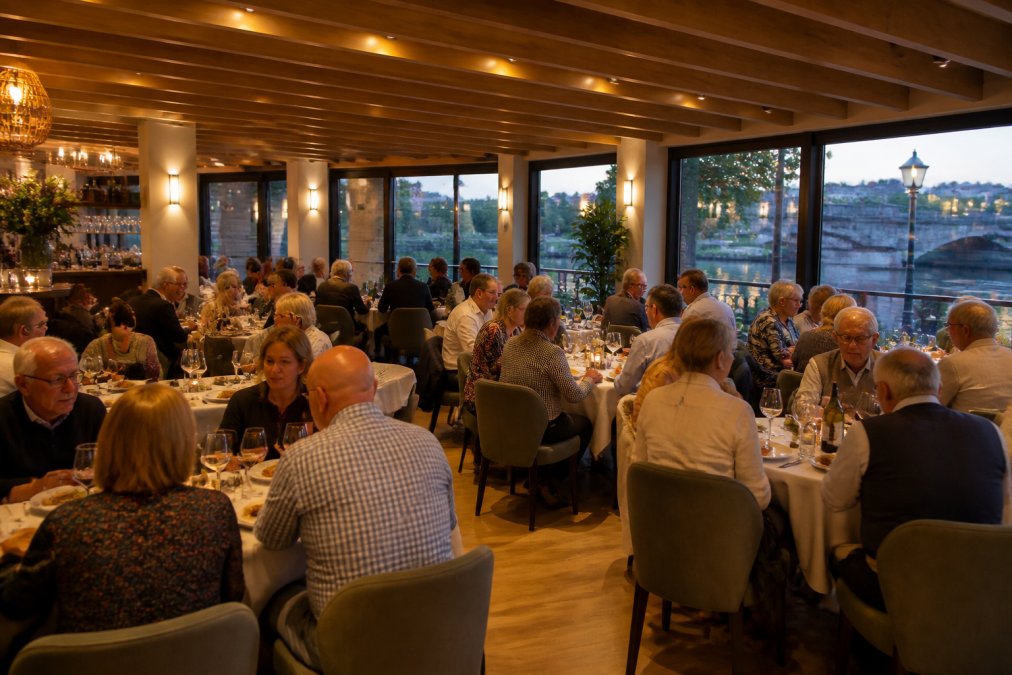
The right venue must balance two competing demands: it needs to feel exclusive without feeling cramped. A space designed for 100 people will swallow 40 and kill the atmosphere. A space designed for 20 will have you stacking people in corners.
Look for venues with flexible layouts where 40 people can spread across tables without the space feeling empty or overly full. Budget roughly 10-12 square feet per person when seated at tables with food service, that’s 400-480 square feet minimum for a 40-person event. Riverside locations with natural sightlines work particularly well because they create a sense of space without needing a cavernous room.
Ask venues these specific questions: Can you close off a section so the rest of the venue doesn’t distract from your event? What’s the maximum and minimum comfortable capacity for this space? Do you have flexible table configurations?
Accessibility matters. Can guests with mobility issues access the space easily? Is there adequate parking nearby? For a private event, you’re responsible for your guests’ experience from arrival to departure. Physical infrastructure, toilets, bar access, kitchen proximity, becomes critical at 40 people. If the toilets are down a narrow corridor, you’ll have a bottleneck. If the bar is separated from the main space, your drinks service suffers. If the kitchen is too far from the dining area, food arrives cold.
How to Budget for a Private Event
Budgeting for planning private events for 40 guests requires breaking costs into five clear categories: venue hire, catering, drinks, entertainment, and contingency.
Start with the venue. Some venues charge a flat hire fee; others work on a minimum spend basis where you commit to spending a certain amount on food and beverages. Understand which model applies before committing.
Catering costs depend entirely on your menu. A casual buffet costs significantly less than plated service. Locally sourced ingredients often cost more than mass-produced alternatives, but guests notice the difference. Budget for dietary requirements: vegan, gluten-free, and allergy-friendly options are non-negotiable for inclusive events.
Drinks often surprise people with their cost. A typical guest consumes 2-3 drinks over a 3-hour event. If you’re providing an open bar, that’s 80-120 drinks total. Specialist beers and quality wines cost more but set the tone for the evening.
Entertainment, whether live music, a DJ, or open mic, is where many budgets get derailed. A solo musician for 3 hours costs considerably less than a full band, but the atmosphere differs dramatically. Decide early whether entertainment is essential.
Build in a contingency of 10-15% for unexpected costs. Venue availability changes, guest counts shift, dietary requirements emerge late.
Catering Ideas for 40 Guests: Menu Planning and Dietary Needs
Catering for 40 guests is fundamentally different from catering for 20. You have enough people to justify multiple menu options, but not so many that you’re managing an industrial kitchen operation. The sweet spot is 2-3 main dishes with substantial vegetarian and vegan alternatives.
Consider the event’s length and timing. A 2-hour drinks reception needs 6-8 pieces per person of passed or stationary canapés. A seated dinner assumes 1.5-2 portions per person if you’re doing multiple courses.
Locally sourced ingredients create memorable meals. Instead of generic salmon and chicken, work with suppliers who can tell you where the meat came from and why it tastes different. Guests at private events remember food that tastes like it was cooked with intention.
Dietary requirements are baseline expectations. When you invite 40 people, statistically you’ll have vegans, vegetarians, people with gluten sensitivities, and those with allergies. Plan for these from the start. A proper vegan carvery or plant-based main course shouldn’t feel like a compromise; it should be genuinely delicious.
Menu planning works best with a clear structure: one or two substantial meat or fish dishes, one vegetarian option, and one vegan option. This gives flexibility without overwhelming your kitchen. Temperature control matters, hot food needs to stay hot; cold food needs to stay cold. Work with your venue to understand their plating and service capacity.
Event Planning Checklist for Small Groups
A structured timeline prevents chaos. This checklist covers the essentials from booking through follow-up.
8-12 weeks before:
- Confirm the date and guest count
- Book your venue
- Confirm catering capacity and menu options
- Decide on entertainment needs
6-8 weeks before:
- Finalize your guest list
- Send save-the-date notices
- Book entertainment
- Confirm any special dietary requirements from early RSVPs
4-6 weeks before:
- Send formal invitations with RSVP deadline
- Confirm final numbers with your venue
- Plan your seating arrangement if applicable
- Arrange any audio-visual requirements planning event coffee.
2-4 weeks before:
- Follow up on RSVPs
- Finalize the menu with your caterer
- Confirm all dietary requirements
- Plan the event flow and timing
1 week before:
- Confirm final guest count
- Review the complete event brief with your venue
- Confirm all vendor details
- Brief anyone helping you on the day
Day of event:
- Arrive early for setup
- Do a final check of audio-visual equipment
- Confirm bar and catering readiness
- Brief staff on any last-minute changes
Create a single event brief document that includes the complete timeline, guest list, dietary requirements, venue contact details, and contingency plans. Share it with your venue and all vendors. This becomes your reference guide if anything goes wrong.
Hiring Live Music for Private Parties
Live music transforms a private gathering from pleasant to memorable. For planning private events for 40 guests, music creates atmosphere without dominating the space.
The key decision is format: solo musician, acoustic duo, or small ensemble. A solo guitarist or pianist costs significantly less than a three-piece band and works beautifully for intimate events. The musician can read the room and adjust volume and tempo based on the evening’s energy.
During dinner service, music should be background-level, loud enough to create ambiance, quiet enough that people can have conversations across their table. As the evening progresses, you can increase volume if the mood suits it.
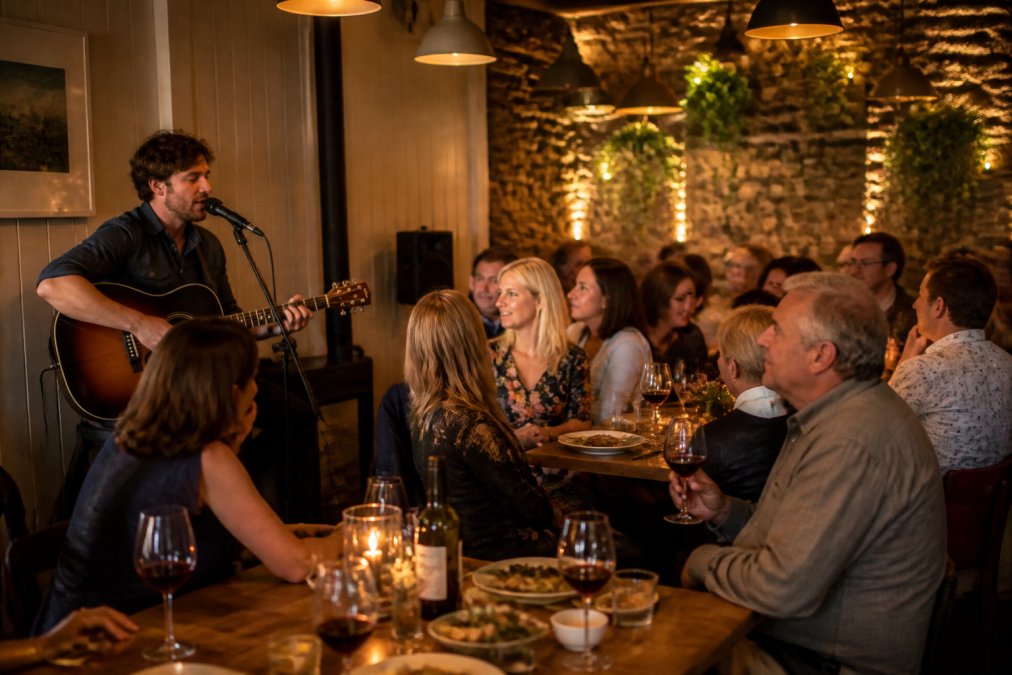
Work with musicians who understand event dynamics. Someone trained in restaurant and private event work will know how to manage volume, song selection, and pacing. Discuss the playlist in advance and confirm whether they take requests.
Technical setup is straightforward for acoustic performers. Confirm whether they need a microphone (usually yes, even for acoustic instruments, to project across 40 people). Ask about power requirements and whether they need any special setup space. A corner or alcove works better than the center of the room.
Budget for a 3-hour performance with a 15-minute break midway through.
Audio-Visual Setup, Accessibility, and Event Flow
Audio-visual requirements for planning private events for 40 guests are usually modest but essential. At minimum, you’ll want a sound system capable of handling background music and microphone amplification for toasts or speeches.
Confirm your venue’s AV capabilities before booking. Can they provide a sound system? Do you need to hire external AV support? You typically need: a microphone, speakers that cover the entire space evenly, and a way to connect music sources.
Test everything the day before if possible. Sound systems fail in unpredictable ways, and discovering that the microphone feeds back once your event is underway is a disaster.
Accessibility requires thinking beyond wheelchair access. Can guests with hearing difficulties access audio? Can those with visual impairments navigate the space safely? Ensure pathways are clear, lighting is adequate, and staff know how to assist guests with specific needs.
Event flow is the invisible architecture that makes or breaks a gathering. For a 3-hour private event, a typical flow looks like: arrival and drinks (30 minutes), move to dining area (10 minutes), dinner service (90 minutes), dessert and speeches if applicable (30 minutes), informal socializing (30 minutes). Adjust based on your specific event, but provide structure. Brief whoever’s hosting on how to manage transition points, a simple announcement works: "We’ll be moving to the dining area in five minutes."
Post-Event Follow-Up and Sustainability Considerations
Follow up within 48 hours with a simple thank-you message to attendees. Gather feedback strategically, a brief email asking what guests enjoyed most and what could improve next time yields useful insights.
Sustainability is increasingly important for private events. Minimize single-use plastics by using proper glassware and crockery. Source locally to reduce transport emissions. Work with your caterer to minimize food waste; many will donate unused food to local charities if you request it.
Document the event with photos or video if guests are comfortable with it. Review your budget against actual spending and keep records of vendor contact details and pricing; good vendors are worth returning to.
Planning private events for 40 guests requires attention to detail that larger events can gloss over and smaller gatherings don’t demand. The venue needs to feel intimate without cramping people. The catering needs to be substantial and inclusive. The timeline needs structure without rigidity.
Plonkers Wine Bar’s experience hosting private celebrations shows that the best events happen when hosts plan thoroughly but stay flexible. You’ve thought through the logistics so that on the day, you can actually be present with your guests instead of managing crises.
UK events insurance guidance from the Association of Independent Event Organisers provides essential information on protecting your event. For dietary guidance and allergen management, Food Standards Agency allergen labelling requirements outlines what caterers must disclose. And for accessibility standards in public spaces, Equality Act 2010 guidance on accessible venues ensures your venue meets legal obligations.
Book Plonkers Wine Bar for your next private gathering. Our riverside location, home-cooked food from locally sourced ingredients, and specialist drinks selection create the kind of memorable occasion that 40 guests will discuss long after the evening ends.
Frequently Asked Questions
How do you choose the right venue for 40 guests?
Look for a space that feels comfortable rather than cramped, 40 guests need roughly 1.5 square metres per person for dining and movement. Check that the venue can accommodate your guest list without feeling overcrowded, offers adequate catering facilities, and has the atmosphere you want (casual, upscale, intimate). Visit in person if possible. Confirm parking, accessibility, and whether the venue provides tables, chairs, and bar service. Independent venues often offer more flexibility than chains.
What catering options work best for a 40-person private event?
For 40 guests, consider a mix: seated three-course meals work for formal occasions; buffet or sharing platters suit relaxed celebrations; drinks receptions with canapes work for shorter gatherings. Plan for dietary requirements upfront, ask guests about allergies, veganism, and other needs when you send invitations. Family-run venues often excel at bespoke menus that reflect locally sourced ingredients and can accommodate special requests without feeling like an afterthought.
What are the key stages of event planning for a private gathering?
The main stages are: define your event brief and date, confirm your venue and capacity, set your budget and allocate funds, plan your guest list and send RSVPs, arrange catering and confirm dietary requirements, organise audio-visual or entertainment needs, create a detailed timeline, brief all vendors and staff, execute the event, and follow up with guests afterward. Each stage builds on the previous one, skipping details early causes problems later.
How much should I budget for a private event with 40 guests?
Budget depends on venue hire, catering per head, drinks, entertainment, and décor. Costs vary significantly based on whether you choose a casual venue or upscale setting, and whether you include live music. Request a quote from your chosen venue, independent establishments often provide bespoke packages tailored to your occasion and budget rather than fixed pricing. Factor in a contingency of 10-15% for unexpected costs.
How often should I send event reminders to my 40 guests?
Send your initial invitation 4-6 weeks ahead, request RSVP responses 2 weeks before the event, send a reminder 1 week out, and a final reminder 2-3 days before. For dietary requirements, confirm details 1 week in advance so catering can prepare properly. Too many reminders feel intrusive; too few and guests forget. A clear RSVP deadline helps you confirm final numbers with your venue and catering team.
What should I include in my event planning checklist for a 40-guest gathering?
Your event planning checklist should cover: event brief (date, time, occasion, budget), venue booking and capacity confirmation, guest list and RSVP tracking, catering menu and dietary requirements, drinks selection and bar setup, audio-visual or entertainment arrangements, floor plan and seating, timeline and run-of-show, vendor contact details, accessibility and parking, décor and atmosphere, contingency plans, and post-event feedback. Tick items off weekly to stay on track.
Why is sustainability important when planning a private event?
Sustainable event planning reduces waste, supports local suppliers, and reflects well on your values. Choose venues that source locally, use minimal single-use plastics, and offer real plates and glasses rather than disposables. Communicate your sustainability goals to catering staff. Donate leftover food responsibly if possible, and collect feedback afterward to improve future events. Family-run, independent venues often have strong sustainability practices built into their operations.
This article was written using GrandRanker