
Table of Contents
- What You’re Actually Paying For with Riverside Dining
- Is Fine Dining Worth the Money at a Waterside Venue?
- Time-of-Day Value: When Riverside Dining Costs Less
- Best Riverside Restaurants with a View: What Separates Good from Great
- What Independent Riverside Venues Offer That Chains Cannot
- Tips for Booking Riverside Tables and Getting the Best Experience
- The Verdict: Is Riverside Dining Worth It?
Last Updated: August 15, 2026
What You’re Actually Paying For with Riverside Dining
Riverside dining bundles location, atmosphere, and food into a single price. At Plonkers Wine Bar, we’ve been part of the York riverside scene since the early 1980s, and we hear this question regularly: is the view worth the extra cost?
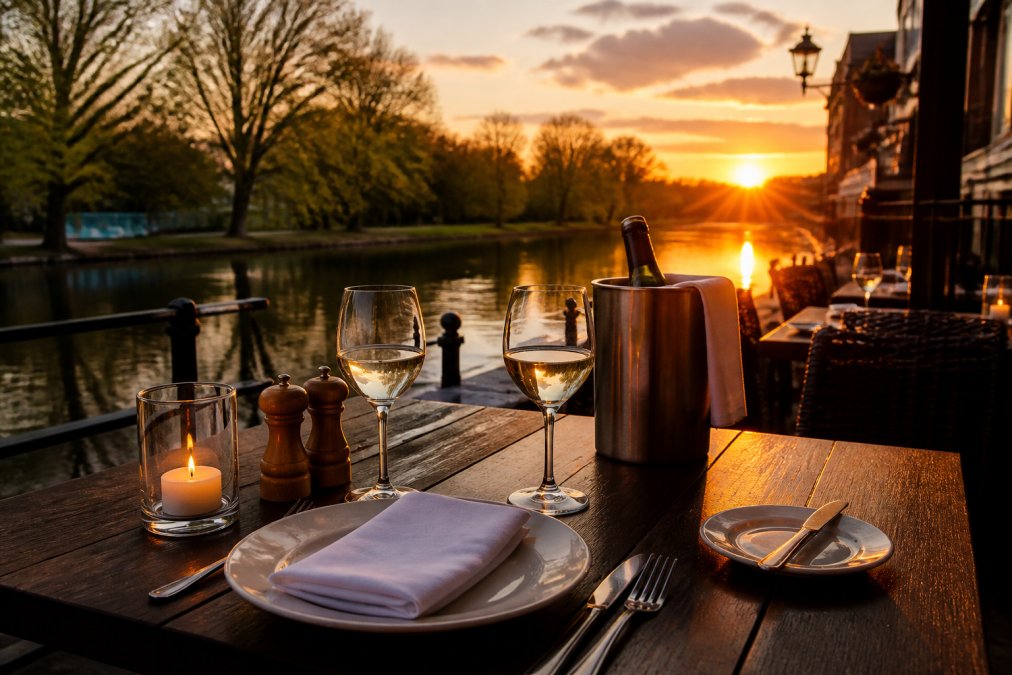
The honest answer depends entirely on what’s behind the price tag. A waterside setting commands a premium because it offers something genuinely scarce. But a scenic location alone does not make a meal memorable. The real question is whether the food, service, and ambiance justify the full bill, or whether you’re simply paying for the postcode.
The Location Premium: How Much Extra Does a View Cost?
Venues with waterside frontage carry higher rents, and those costs filter through to menus. A meal that might cost one price at an inland bistro costs noticeably more at a comparable riverside venue, not because the food is better, but because the setting is rarer.
What you’re buying is a sensory experience: the sound of water, natural light across the table, and a backdrop that makes the occasion feel distinct. For a celebration or date, that premium often makes sense. For a routine Tuesday lunch, it may not.
Some riverside restaurants charge for the view and deliver on it across every element, quality ingredients, attentive service, a thoughtful drinks list. Others lean on the location as a substitute for effort in the kitchen. Spotting the difference before you book is the skill worth developing.
Hidden Costs That Catch Diners Off Guard
The advertised menu price is rarely the full story.
Cover charges and terrace supplements: Some venues add a per-person charge for terrace or window seating, a cost that doesn’t appear on the main menu.
Service charges: Many fine dining venues add a discretionary service charge of 10-15% to the bill, legal and common under current UK hospitality practice.
Drinks margins: Waterside venues frequently apply higher margins to wine and cocktails than local independents.
Booking deposits: Popular riverside restaurants increasingly require non-refundable deposits to secure tables, particularly at peak times.
The smart approach is to total the likely spend before you arrive: menu prices, drinks, service charge, and any seating supplements.
| Hidden Cost | When It Applies | How to Check |
|---|---|---|
| Terrace supplement | Premium window or outdoor seats | Ask when booking |
| Service charge | Most fine dining venues | Check menu small print |
| Drinks markup | All waterside venues | Compare wine list to retail |
| Booking deposit | Peak times, popular venues | Read cancellation policy |
| Minimum spend | Event nights, busy periods | Confirm when reserving |
Is Fine Dining Worth the Money at a Waterside Venue?
Fine dining at a waterside venue is worth the money when the kitchen matches the setting. The culinary experience has to carry its own weight independent of the view. A spectacular backdrop alongside mediocre food is one of the most reliable ways to leave a restaurant feeling short-changed.
According to the Food Standards Agency’s guidance, diners have a reasonable expectation that the quality of food matches what is implied by the price and presentation.
When the Culinary Experience Justifies the Price Point
The clearest signal that a riverside venue is worth the price is a menu built around seasonal ingredients sourced with genuine care. Seasonal menus change frequently, which rewards repeat visits.
Seafood is often the standout at waterside venues, partly by tradition and partly because it pairs naturally with the setting. Home-cooked food, genuinely made on site from fresh ingredients rather than reheated from a central kitchen, is the other marker of a kitchen that respects its diners. One guest at Plonkers Wine Bar put it plainly: "I’ve been let down by so many restaurants that say they cater to dietary requirements but then offer three sad options." The standard for genuine quality is a kitchen that adapts, not one that gestures at it.
How to Spot a Tourist Trap Before You Book
The biggest mistake with riverside dining is confusing a good location for a good restaurant. Tourist traps share recognisable traits:
- Menus that haven’t changed in years with no seasonal specials
- Generic descriptions with no mention of provenance
- Heavy discounting on review platforms, signalling low repeat custom
- No mention of where ingredients come from
- Staff who cannot answer basic questions about the menu
Conversely, a venue that names its suppliers, changes its menu seasonally, and has a curated drinks list is almost always worth the visit. Transparency about sourcing and preparation is one of the strongest indicators of genuine quality in UK hospitality.
Time-of-Day Value: When Riverside Dining Costs Less
The time-of-day value comparison is one of the most overlooked tools in a diner’s budget. The same riverside view costs significantly less at lunch than at dinner, and many venues offer fixed-price menus during off-peak hours that represent outstanding value.
Lunch sittings frequently offer two or three-course set menus well below the evening à la carte equivalent. The food comes from the same kitchen, the view is identical, and a lunchtime table on a terrace can be preferable, better light, quieter atmosphere, no need to book far in advance.
Early evening dining, before 6:30pm, typically means shorter wait times, more attentive service, and access to the same seasonal menu at a lower price point.
The practical framework for time-of-day value:
- Lunch: Best value, often fixed-price menus, ideal for families or budget-conscious diners
- Early evening (before 6:30pm): Reduced menus at many venues, quieter atmosphere
- Peak dinner (7pm-9pm): Full à la carte pricing, busiest service
- Weekend brunch: Mid-range pricing, relaxed pace, often the best slot for al fresco seating
For diners who want the full riverside dining experience without the full dinner bill, a long weekend lunch is the single best value option.
Best Riverside Restaurants with a View: What Separates Good from Great
Most guides to the best riverside restaurants focus on the view alone. That’s the wrong lens. The view is a constant. What separates a genuinely great riverside restaurant from a merely scenic one is everything that happens at the table.
Consistency across food quality, service, and atmosphere, not just on their best nights, but reliably, is emphasised by guides to restaurant quality.
Atmosphere, Ambiance, and the Scenic Views Factor
Atmosphere at a riverside venue combines the physical setting and the human element. Scenic views provide the backdrop, but ambiance is created by lighting, sound levels, the warmth of the welcome, and the feel of the room. A venue with a stunning waterside outlook but harsh lighting, rushed service, and indifferent staff delivers a hollow experience.
The best riverside restaurants understand that the view is a starting point, not a substitute for hospitality. Warm, genuine service, where staff know the menu, remember regulars, and handle dietary requirements without making diners feel like a burden, transforms a meal from pleasant to memorable.
One returning visitor to Plonkers Wine Bar described the experience precisely: "You sense the history of York and the resilience of the staff against the flood onslaughts over the years. The staff make this bar a delight, always smiling and laughing."
Cuisine Quality: Seafood, Contemporary British, and Seasonal Menus
Cuisine quality at waterside venues spans a wide range, from seafood-focused fine dining to casual contemporary British menus built around local produce. The strongest performers commit to a clear culinary identity rather than trying to please everyone.
Seafood is a natural fit for riverside settings and, when sourced well, delivers flavour that justifies a premium price point. Contemporary British cooking, which draws on seasonal British ingredients prepared with modern technique, has become the dominant style at quality waterside venues.
Seasonal menus matter more than menu length. A focused menu of twelve dishes that change monthly demonstrates kitchen confidence and ingredient quality.
What Independent Riverside Venues Offer That Chains Cannot
Independence is not a marketing point. It’s a structural advantage that changes almost everything about how a venue operates.
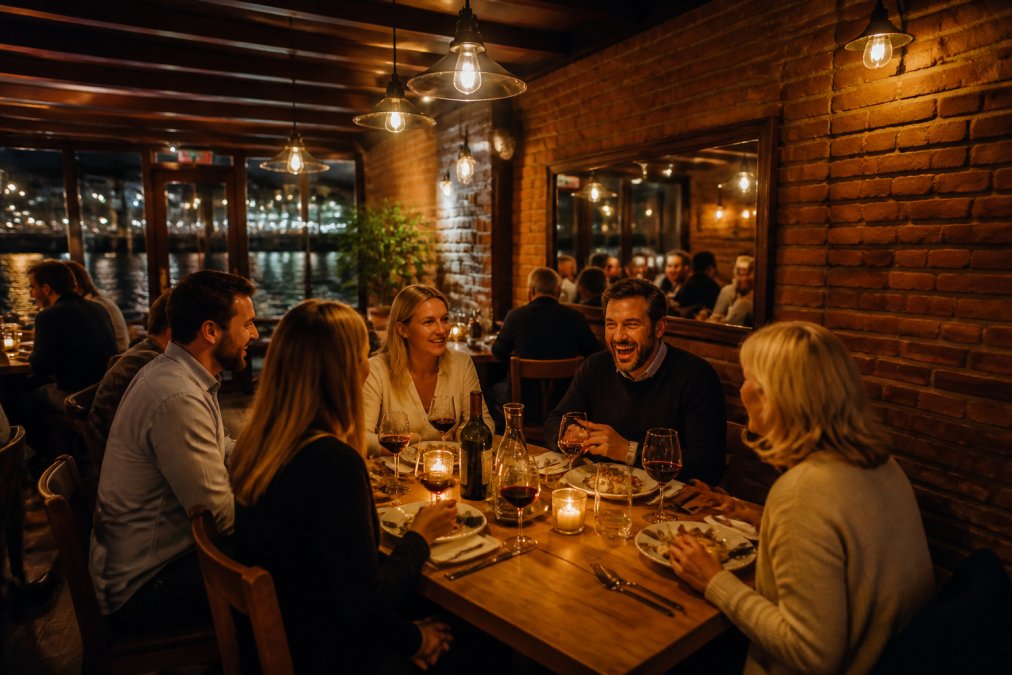
A chain restaurant is bound to supplier agreements, standardised menus, and corporate pricing. An independent venue makes its own decisions about where food comes from, what goes on the menu, and how the room feels. That freedom produces something a chain simply cannot replicate: genuine individual character.
At Plonkers Wine Bar, being completely independent means the drinks list reflects genuine curation, specialist beers, wines, and spirits chosen for quality, including support for local breweries. The food menu is built around locally sourced meat, fish, and vegetables. Those decisions are made by people who care about the outcome.
Independent venues also tend to attract and retain staff invested in the place. The hospitality is personal because the ownership is personal. A family-run business that has operated since the early 1980s has weathered enough to know what its regulars value.
Tips for Booking Riverside Tables and Getting the Best Experience
The biggest mistake when booking a riverside table is leaving it too late. The best tables at the best times go quickly, particularly in summer when al fresco seating becomes most sought-after.
Reservations, Walk-Ins, and Peak Hours
Reservations are strongly advisable for any riverside venue during peak hours: Friday and Saturday evenings, Sunday lunch, and bank holiday weekends. When making a reservation, ask specifically for a riverside or terrace table if that’s your priority.
Peak hours run from 7pm to 9pm on weekdays and 12:30pm to 2:30pm on Sundays. Booking outside these windows often means better service and a more relaxed atmosphere.
Walk-ins are most likely to succeed at lunch on weekdays or at the start of evening service before the dining room fills.
Al Fresco and Terrace Seating: Planning Around the Seasons
Al fresco riverside dining is one of the genuinely great pleasures of a British summer. Terrace season at most riverside venues runs reliably from late May through September, with June, July, and August offering the best combination of warmth and daylight.
According to the Met Office, average temperatures in the north of England during June to August make outdoor dining comfortable in the evenings, though afternoon showers remain possible.
The practical checklist for terrace bookings:
- Confirm terrace availability when reserving, not on the day
- Ask whether there is covered or heated outdoor space for changeable weather
- Check the venue’s policy for moving indoors if the weather turns
- Book early evening rather than late evening for the best light
- Avoid booking terrace-only for large groups where flexibility is limited
The Verdict: Is Riverside Dining Worth It?
Riverside dining is worth the price when the venue earns it through food that stands on its own merits, service that makes the occasion feel considered, and a setting that adds genuine atmosphere. The view is the starting point, not the justification.
The clearest value proposition comes from independent venues that treat the location as context for a genuinely good meal. When the kitchen uses seasonal ingredients sourced locally, when the drinks list reflects real curation, and when the hospitality is warm enough to make you want to return, the premium makes complete sense.
The worst value comes from venues that lean on the waterside setting while delivering chain-level food and impersonal service at fine dining prices. Identifying the difference before you book, by checking menu transparency, reading recent reviews, and asking direct questions about sourcing, is the skill that separates a memorable evening from an expensive disappointment.
For most diners, the answer to "is it worth it?" is yes, provided you choose the right venue, book at the right time, and go in with honest expectations about what you’re paying for.
Choosing where to dine on the riverside should never be a gamble. Plonkers Wine Bar has offered genuine home-cooked food, locally sourced ingredients, and a warm independent atmosphere on the York riverside since the early 1980s, the kind of experience where the food earns its place alongside the view. Whether you’re planning a celebration for up to 130 guests or a quiet evening with a specialist wine list, book your table at Plonkers Wine Bar and experience riverside dining that’s genuinely worth it.
Frequently Asked Questions
Are riverside restaurants generally more expensive than city centre venues?
Riverside restaurants often charge more than equivalent city centre venues, primarily because waterside locations command higher rents and the scenic views are priced in. You can expect to pay a premium for terrace or window seats at peak hours. That said, the gap narrows considerably if you dine at lunch, choose a fixed-price menu, or visit an independent venue rather than a large chain. The key is knowing what you are paying for before you book.
How do you spot a tourist trap riverside restaurant?
A tourist trap riverside restaurant typically prioritises the view over the food. Warning signs include a very long menu with no seasonal focus, generic dishes that could come from any supplier, and staff who seem indifferent once you are seated. Contrast that with venues that highlight locally sourced ingredients, change their menu with the seasons, and earn repeat visits from local residents. A riverside spot that locals actually return to is rarely a tourist trap.
Is the food quality at riverside venues typically lower because of high overheads?
High overheads do put pressure on margins, and some venues respond by cutting ingredient quality. However, this is not universal. Independent riverside restaurants with direct relationships with local suppliers can maintain high food standards without the cost structures of large chains. The best riverside dining experiences combine genuine culinary care with the waterside setting, so food quality and location are not mutually exclusive. Reading recent reviews that specifically mention the food, not just the view, helps you separate the two.
What are the best ways to enjoy a riverside meal on a budget?
Dining at lunch rather than dinner is the single most effective way to reduce the bill at a riverside venue, as many offer fixed-price lunch menus at a noticeably lower price point. Booking mid-week avoids peak-hour premiums and increases your chances of securing a good table. Opting for the set menu over à la carte, sharing starters, and choosing house wines or local ales over premium bottles all help. Visiting an independent venue with a genuine commitment to value for money rather than a destination restaurant built around its postcode also makes a meaningful difference.
This article was written using GrandRanker