Table of Contents
- How Often Do Bistros Host Music: Setting a Realistic Schedule
- PPL PRS Music Licence Requirements for Bistros and Small Venues
- The Benefits of Live Music in Bistros: Atmosphere, Spend, and Loyalty
- How to Schedule Live Music Events in Your Bistro
- Managing Volume, Tempo, and the Soundscape During Service
- Cost-Benefit Analysis of Live Music for Independent Bistros
- How Bistros Host Music That Reflects Their Brand Identity
- Conclusion
Last Updated: August 12, 2026
How Often Do Bistros Host Music: Setting a Realistic Schedule
Many independent bistros struggle with the same question: how often can they host music without overextending budget, exhausting staff, or turning a relaxed dining room into chaos? The answer depends on your footfall patterns, physical space, licensing position, and the atmosphere you want to create. There’s a practical framework that applies to independent bistros of almost any size.
Frequency Benchmarks by Venue Size and Footfall
How often bistros host music varies by capacity and trading patterns:
| Venue Capacity | Recommended Live Music Frequency | Format |
|---|---|---|
| Under 30 covers | 1-2 nights per month | Solo acoustic or duo |
| 30-60 covers | 2-4 nights per month | Solo, duo, or small ensemble |
| 60-100 covers | Weekly (1-2 nights) | Varied formats |
| 100+ covers | Weekly or more, with themed nights | Full programme |
These are starting points, not rules. A 40-cover bistro with loyal locals and strong weekend trade can sustain weekly live music more comfortably than a 60-cover venue relying on passing footfall.
The most important variable is consistency. Venues that host music sporadically see lower attendance per event than those anchoring music to a fixed night. Regulars plan around a Wednesday open mic or Friday acoustic session. Irregular events feel like one-offs rather than part of your venue’s identity.
Bistro-Specific Programming: Matching Events to Your Trading Week
Most bistros don’t need a seven-night programme, they need the right nights.
Look at your trading data across four weeks. Identify your two or three strongest evenings, then ask whether live music would enhance those nights or simply add noise to busy service. Many bistros find Thursday, Friday, and Saturday evenings most receptive to music, while Sunday lunchtimes work well for low-key acoustic sessions.
Open mic nights deserve special mention. They’re cost-effective, build a community of returning performers and audiences, and create genuine atmosphere without professional booking overhead. A monthly open mic alongside fortnightly acoustic sessions gives a 40-60 cover bistro a credible music programme without overwhelming staff.
PPL PRS Music Licence Requirements for Bistros and Small Venues
PPL PRS music licence requirements are the legal foundation of any bistro music programme. A music licence grants permission to play copyrighted music publicly, covering royalty fees owed to composers, songwriters, and recording artists.
According to PPL PRS TheMusicLicence guidance for businesses, most UK businesses playing music in public, whether background music from streaming or live performance, require a TheMusicLicence. This single licence covers both PPL (recording artists and labels) and PRS for Music (composers and publishers). Operating without it exposes you to enforcement action, fines, and back-payment of royalty fees.
Background Music vs Live Performance: What Each Licence Covers
TheMusicLicence covers:
- Background music played through a sound system, including streaming services, radio, or digital playlists
- Live performances of copyrighted music by musicians in your venue
- Recorded music played as part of a DJ set or between live acts
A common mistake is assuming a consumer streaming subscription grants commercial public performance rights. It does not. Consumer accounts explicitly exclude public performance rights. Bistros using these services without a separate public performance licence operate outside the law.
Playing music through a consumer streaming account in a public venue does not satisfy your legal obligations under UK copyright law. Enforcement agents from PPL PRS visit commercial premises. Consequences include fines and claims for unpaid royalties dating back to when unlicensed music began.
Risks of Playing Unlicensed Music
The risks extend beyond fines. A venue found in breach of public performance rights faces civil claims from rights holders, negative press, and reputational damage that takes longer to repair than licence costs. For independent bistros, community goodwill is your most valuable asset. Protecting it starts with legal compliance.
Licence fees are calculated based on venue capacity and music use. Check the PPL PRS licence fee calculator for hospitality venues for current rates applicable to your venue.
The Benefits of Live Music in Bistros: Atmosphere, Spend, and Loyalty
Live music transforms a bistro from a place where people eat into a place where people stay, return, and recommend.
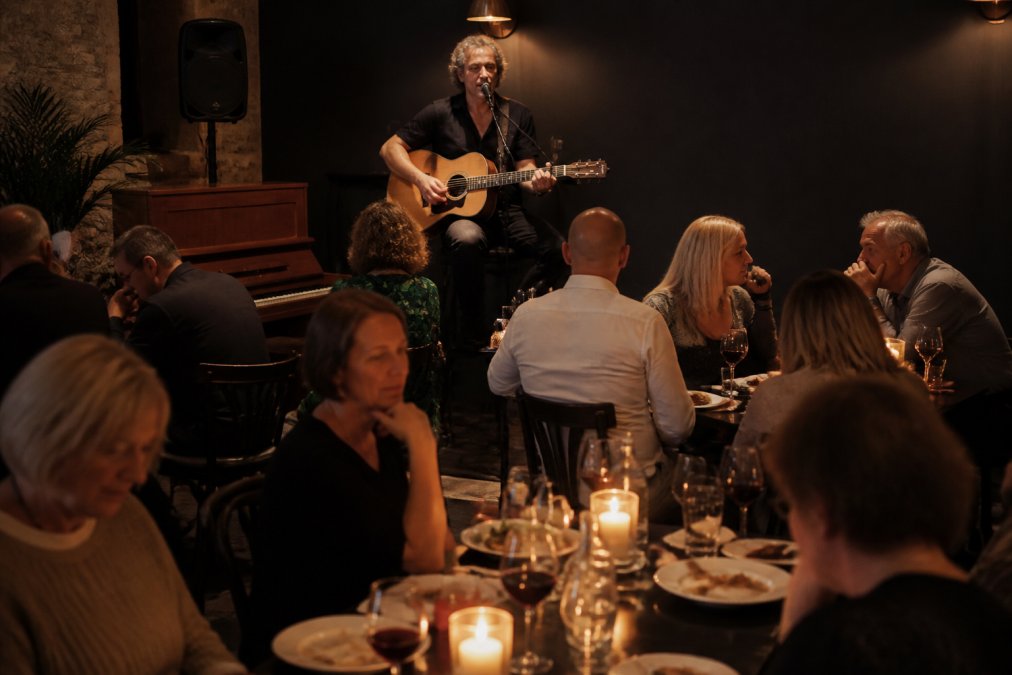
Research consistently shows that acoustic environment shapes how guests perceive food quality, service, and overall experience. A well-curated soundscape signals care and intention, supporting brand awareness and customer retention.
How Music Affects Dining Duration and Table Turnover
Slow-tempo music encourages guests to linger, increasing average spend per cover. Fast-tempo music shortens dining duration and increases table turnover. Neither is inherently better, it depends on your business model.
A busy Friday evening may benefit from slightly faster tempo to keep tables moving. The same venue on a quiet Tuesday might prefer slower, atmospheric music to encourage additional orders and longer stays.
As documented in research on music tempo and consumer behaviour in dining environments, the relationship between tempo and spending is well-established in hospitality psychology. Think of your music programme as a tool for managing service rhythm, not just mood.
Live music nights drive higher spend per head. Guests attending a promoted live music event arrive with a different mindset. They’re there for an experience, translating into longer stays, more drinks, and stronger likelihood of returning.
Live music nights consistently drive higher spend per cover than standard service evenings. Match tempo and format to your service goals, not just personal preference.
How to Schedule Live Music Events in Your Bistro
Scheduling live music is a practical process. Bistros that do it well treat it like any other operational planning: systematic, measurable, and regularly reviewed.

Step 1: Audit Your Space and Acoustic Environment
Before booking anyone, understand what your space can support:
- Floor area and layout: Can you create a performance zone without compromising covers or fire safety?
- Acoustic properties: Hard floors and bare walls create echo; soft furnishings absorb it. Poor acoustics make excellent musicians sound unpleasant.
- Power supply: Does your venue have adequate power points near the performance area?
- Noise transmission: Will music carry into neighbouring properties? Check whether your premises licence includes noise conditions.
Booking a full band for a room suited to solo performance creates volume problems nobody enjoys.
Step 2: Choose Your Format and Frequency
Based on your space audit and trading data, decide:
- How many music nights per month are sustainable for your team?
- Which format suits your room: solo acoustic, duo, small ensemble, or open mic?
- Which evenings will anchor music, fixed week to week?
- Will events be free entry, ticketed, or ticketed with a food-and-music package?
Start conservatively. Two well-executed evenings per month build more momentum than four chaotic ones.
Step 3: Source Artists and Set a Budget
Local musician networks, music colleges, and community arts organisations are reliable sources for independent bistro bookings. Fees vary significantly by experience and profile. Set a realistic budget per event accounting for musician fees, equipment hire, and promotion.
Open mic nights dramatically reduce artist booking costs while building a loyal community of performers who bring their own audiences. Many successful bistro music programmes start with monthly open mics and grow from there.
Step 4: Promote Events and Measure Results
Promotion is where many bistros underinvest. A music night with no audience benefits nobody. At minimum:
- Update your website events calendar three weeks in advance
- Post on social media with consistent event branding
- Use your email list if available
- Display in-venue signage from two weeks out
After each event, track covers, average spend, and feedback. Compare against a standard service evening. This data tells you whether your music programme drives revenue growth or simply adds cost.
Managing Volume, Tempo, and the Soundscape During Service
Volume control is the single most common complaint on live music nights. Music should enhance conversation, not prevent it. A guest who shouts to order a second course won’t return for another music night.
Agree volume limits with performers before arrival. A brief soundcheck before doors open is essential. Designate staff to monitor volume throughout the evening and communicate directly with the performer if adjustments are needed.
Tempo management is equally important. Work with musicians in advance to understand their set structure. If they open with quieter material and build through the evening, that arc should align with your service rhythm.
Soft furnishings, curtains, and strategically placed plants absorb sound and reduce echo. These low-cost interventions significantly improve how music sits in a dining room.
Cost-Benefit Analysis of Live Music for Independent Bistros
The cost-benefit analysis is straightforward: does additional revenue from a music night exceed additional costs?
Costs to account for:
- Musician fees
- Equipment hire or PA costs
- Additional staffing if needed
- Promotional spend
- PPL PRS licence (annualised per event)
Revenue drivers to measure:
- Covers on music night versus comparable non-music evening
- Average spend per head
- Ticket revenue if applicable
- Repeat visits attributable to music events
Many independent bistros find that modest increases in average spend per cover on music nights cover musician fees comfortably. The longer-term benefit, customer retention and brand awareness as a music venue, is harder to quantify but consistently reported by venues committing to regular programmes.
According to UK Hospitality industry guidance on venue events and revenue, events-led programming is one of the most effective strategies for independent venues differentiating from chains. Treat live music as a strategic investment rather than occasional indulgence.
How Bistros Host Music That Reflects Their Brand Identity
The most effective music programmes don’t just fill evenings. They communicate what a venue stands for.
A bistro known for locally sourced food and community connection should programme music reflecting those values: local artists, acoustic formats, genres that feel grounded rather than generic. When bistros host music aligned with their identity, events reinforce everything else the venue communicates.
Audio branding, deliberate curation of your venue’s sonic identity, extends beyond live events. Background music during regular service, tempo and genre choices on quiet Monday afternoons, all shape how guests perceive your space. Treat it with the same intentionality you bring to your menu and interior.
| Music Programme Element | Brand Signal | Customer Experience Impact |
|---|---|---|
| Local artists | Community connection | Loyalty, repeat visits |
| Acoustic formats | Intimate, considered | Longer dining duration |
| Open mic nights | Inclusive, grassroots | Community building |
| Curated background playlists | Attention to detail | Perceived quality uplift |
| Volume-controlled service | Guest-first attitude | Comfort, positive reviews |
Plonkers Wine Bar hosts regular live music and open mic nights at our riverside venue. Book your table and check our events calendar to find the next one.
The challenge for any independent bistro isn’t whether to host music. It’s building a programme that’s legally compliant, operationally sustainable, and genuinely reflective of what makes your venue worth visiting. If you’re looking for a venue that takes its music programme as seriously as its kitchen, book a table and experience it for yourself. BOOK NOW at Plonkers Wine Bar.
Frequently Asked Questions
Do I need a licence to play music in my bistro or café?
Yes. Playing any copyrighted music in a commercial setting requires a public performance licence. In the UK, this means obtaining licences from both PPL and PRS for Music. PPL covers the rights of performers and record labels; PRS covers songwriters and composers. Playing music without both licences, whether through a streaming service, radio, or live performance, puts you at risk of enforcement action and fines. A TheMusicLicence from PPL PRS bundles both into a single annual fee for most small venues.
Can I play a personal Spotify account in a commercial bistro setting?
No. Personal streaming accounts, including Spotify Free and Spotify Premium, are licensed for private, non-commercial use only. Playing them in a bistro or any other commercial venue breaches the terms of service and, more importantly, does not cover the public performance rights required under UK copyright law. You would still need a valid PPL PRS licence regardless of the platform. Commercial streaming services designed for business use do exist and are licensed for public performance in commercial settings.
How does live music frequency affect customer dining duration?
Research consistently shows that music tempo and volume influence how long diners stay at the table. Slow-tempo, lower-volume music encourages guests to linger, order more drinks, and spend more per head. Fast-tempo music has the opposite effect, which suits venues aiming for quicker table turnover. For bistros hosting live music, the format matters too, an open mic night draws a crowd that stays longer than a background acoustic set, so scheduling live events on quieter midweek evenings can meaningfully lift revenue on otherwise slow trading nights.
What are the legal requirements for hosting live music in a small venue?
Small venues hosting live music in the UK must hold a premises licence that includes the relevant licensable activity under the Licensing Act 2003. If your current licence does not cover live music, you will need to apply to your local authority for a variation. Additionally, you need a valid PPL PRS licence covering public performance rights for any copyrighted music performed. Venues with a capacity of 500 or fewer benefit from some deregulation under the Live Music Act 2012, but a premises licence and music licence are still required for most commercial settings.
This article was written using GrandRanker