Last Updated: November 5, 2026
Quick Summary
To check food safety ratings for allergies in York, look up the venue’s food hygiene rating on the Food Standards Agency website, which runs from 0 to 5. The rating shows kitchen hygiene, not allergen control, so you should also ask the venue directly how it handles your specific allergen.
- Search the venue by name and postcode on the Food Standards Agency website.
- Ratings run from 0 to 5, where 5 means very good hygiene.
- Check the inspection date, since a rating from long ago may not reflect the kitchen today.
- A high hygiene rating does not confirm that a dish is free from your allergen.
- Ask staff which of the 14 named allergens are in each dish and how cross-contact is handled.
Table of Contents
- What a Food Hygiene Rating Does and Does Not Tell You About Allergies
- How to Find York Food Hygiene Ratings Step by Step
- Reading the Rating Scale from 0 to 5 and Checking How Recent It Is
- How to Ask a Restaurant About Food Allergies Before You Visit
- Allergen Questions to Ask Restaurant Staff
- Understanding Food Allergy Cross-Contamination Risk in a Restaurant Kitchen
- Booking Your Visit to a York Venue With Confidence
- Frequently Asked Questions
Planning a meal out with an allergy means you need more than a good-looking menu. A food hygiene rating tells you how well a kitchen is run, but it does not tell you whether a dish is safe for your allergen, so these food safety ratings are only one part of planning a meal out with an allergy. Plonkers Wine Bar is a family-run bistro on the York riverside, and we want to help you tell the two apart before you book.
What a Food Hygiene Rating Does and Does Not Tell You About Allergies
A food hygiene rating is a score given after a local council inspection. It looks at how food is handled, stored, prepared and cleaned, and how the business manages its risks overall. In the UK, the scheme is run by local authorities and supported by the Food Standards Agency food hygiene rating scheme.
The food safety ratings are useful, but they have limits. It does not check whether a specific dish contains peanuts, milk or gluten. It also does not confirm that staff can answer your allergy questions correctly.
The reason for the gap is structural. A hygiene inspection assesses the kitchen against food hygiene and safety requirements. Allergen information is a separate legal duty: under the Food Information Regulations 2014, a food business must provide accurate allergen information for the 14 named allergens, either in writing or through a clear signpost to where it can be obtained, and must be able to verify that information. A venue can score a 5 for hygiene and still have muddled allergen records, because the two are inspected against different criteria and at different times.
Think of the rating as a sign of good general kitchen habits. Think of allergen information as a separate check you make yourself.
What the rating can tell you:
- Whether hygiene practices were sound at the last inspection
- Whether the kitchen is clean and well run
- Whether a problem was found and fixed
- The date the inspection took place, which tells you how current that picture is
What the rating cannot tell you:
- Which allergens are in a particular dish
- Whether cross-contamination is controlled for your allergy
- Whether staff know the ingredients in their sauces and stocks
- Whether the written allergen information is accurate or up to date
- Whether the kitchen has changed hands, menu or suppliers since the inspection
A useful way to hold the two ideas apart is to ask two separate questions. First: is this kitchen well run? The rating answers that. Second: can this kitchen safely feed someone with my allergy? Only the venue can answer that, and only if you ask directly and get specific answers. A high rating is a reasonable starting filter, not a green light.
Watch out: treating a 5 as proof of allergy safety is the most common mistake diners make. The rating measures hygiene, not allergen control, and it is not designed to protect you from a specific allergen.
How to Find York Food Hygiene Ratings Step by Step
Start with the official search tool. Search for the business by its name, street address, town or postcode. Results show the rating and the date of the most recent inspection.
Follow these steps:
- Open the official food hygiene rating search on the Food Standards Agency website.
- Enter the venue name and the York address or postcode.
- Pick the correct business from the results. Check the address matches, since chain sites can look similar.
- Note the rating and the inspection date.
If the venue does not appear, try a shorter name or the postcode alone. Some businesses trade under a different name than the one on the sign.
The steps below show how to look up a venue’s rating and check when it was last inspected.
| Step | What to do | Time or frequency |
|---|---|---|
| 1 | Open the official food hygiene rating search on the Food Standards Agency website | Before you book |
| 2 | Enter the venue name and the York address or postcode | Once per venue |
| 3 | Pick the correct business and check the address matches | Each search |
| 4 | Note the rating and the inspection date | At the time of search |
Reading the Rating Scale from 0 to 5 and Checking How Recent It Is
Ratings run from 0 to 5. A 5 means very good hygiene. A 0 means urgent improvement is necessary. Each band has a plain meaning: (Food Hygiene Rating Scheme (FHRS): guidance for businesses)
- 5 (very good): Hygiene standards are high
- 4 (good): Standards are generally good, with minor points
- 3 (generally satisfactory): Acceptable, with room to improve
- 2 (improvement necessary): Several areas need work
- 1 (major improvement necessary): Significant problems found
- 0 (urgent improvement necessary): Serious concerns
A recent inspection matters more than an old one. Kitchens change staff, menus and routines. Check the inspection date and treat a rating that is several years old with caution.
Watch out: A high rating from an inspection done long ago does not prove the kitchen is safe today.
How to Ask a Restaurant About Food Allergies Before You Visit
Call or message the venue before you go. Ask to speak to someone who knows the kitchen, not only the person taking bookings. Explain your allergy clearly, using the exact allergen name, such as peanut or sesame, rather than a broad category like “nuts”.
A good pre-visit conversation has three parts: what you ask, what a good answer sounds like, and what you record.
What to ask before you book
- Can you tell me which of the 14 named allergens are in each dish, and is that information written down?
- Who in the kitchen checks the ingredient list, and how often is it updated when the menu or suppliers change?
- How do you handle cross-contact for my allergen, separate boards, pans, fryers, utensils and prep areas?
- Can the kitchen prepare my dish in a separate area, and is there a set procedure for allergy orders?
- If an ingredient is uncertain, will staff tell me rather than guess?
What a good answer sounds like
Specific answers name the ingredient, the person responsible and the step in the process. “The sauce is made in-house and contains milk; the chef will use a clean pan and a separate board” is a good answer. “It should be fine” or “I think so” is not. Under the Food Information Regulations 2014, a venue must be able to provide accurate allergen information for the 14 named allergens, so a venue that cannot point to written information is a warning sign, not a reassurance. Written allergen information makes it easier to check that each dish has been considered carefully, and a food allergen checklist can help keep those checks consistent from the kitchen to the table.
What to record
Before you book, note the date and time you called, the name of the person you spoke to, and what they told you. If you confirm by email or message, keep the reply. This record matters if your plans change or if you need to raise a concern later. It also gives the venue a clear basis for the allergy note on your booking.
If the venue cannot answer
Ask to be transferred to a manager or the kitchen. If no one can give a specific answer, treat that as information in itself: the venue may not be set up to handle your allergy confidently. Consider a different dish, a different venue, or a follow-up call at a quieter time when the kitchen can talk.
Watch out: a friendly booking agent is not the same as a kitchen that has checked the ingredients. Always confirm that the answer came from someone with access to the kitchen’s allergen records, and ask for it in writing where you can.
Allergen Questions to Ask Restaurant Staff
Use these questions when you order:
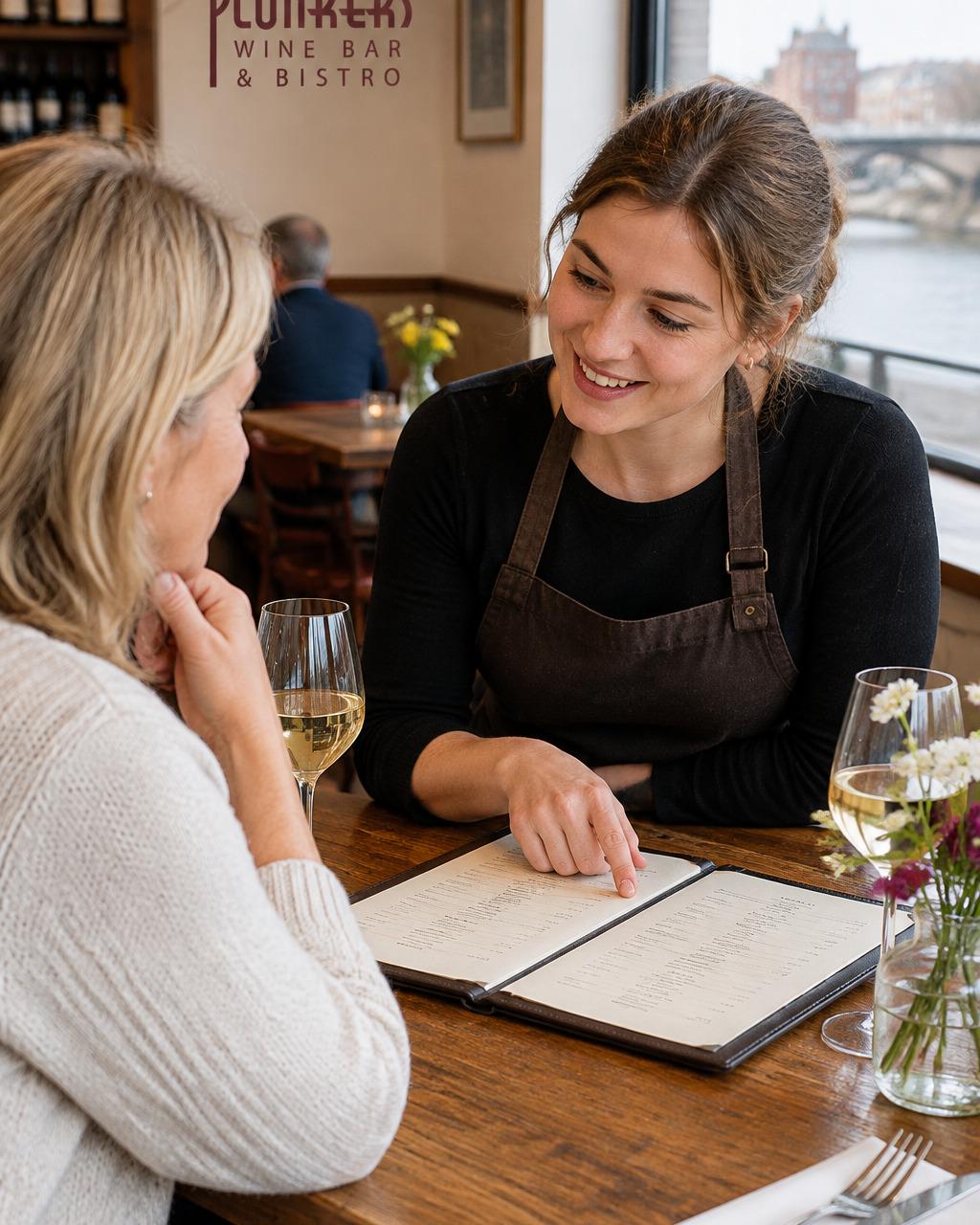
- Which dishes are free from my allergen, and how do you know?
- Are the sauces, stocks and dressings made in-house or bought in?
- Do you use shared fryers, grills or chopping boards?
- Can the chef prepare my dish separately?
- What happens if I am unsure about an ingredient?
Listen for specifics. Staff who name the ingredients and explain the preparation are more reliable than staff who say “it should be fine”.
Understanding Food Allergy Cross-Contamination Risk in a Restaurant Kitchen
Cross-contamination happens when an allergen moves from one food to another. It can come from shared equipment, oils, surfaces or hands. A dish with no allergen listed can still carry a trace if it was cooked on the same pan as something that contains it.
For many allergies, even a small trace matters. A kitchen with good hygiene can still have a cross-contamination risk, because the rating does not measure allergen handling.
Ask directly whether the kitchen separates prep areas or tools for allergy orders. A clear, confident answer is a good sign. If the answer is unclear, consider a different dish or a different venue.
Booking Your Visit to a York Venue With Confidence
Before you book, gather what you need in one place: the rating and inspection date, the answers to your allergen questions, and the name of the person you spoke to. Share your allergy when you book, and remind the team again when you arrive.
If you want to plan further, read our guide to dining with dietary requirements in York. For special occasions, our vegan dining for special occasions page covers what to expect.
At Plonkers Wine Bar, we serve home-cooked food made from locally sourced ingredients, and we are happy to talk through your dietary needs before you visit.
Frequently Asked Questions
How do I check a restaurant’s food hygiene rating?
Search the Food Standards Agency’s Food Hygiene Rating Scheme website, which is the official UK database for food business ratings. Enter the business name and postcode or street address, then open the result to see the rating from 0 to 5 and the date of the latest inspection. Ratings are published by local councils, so the City of York Council’s food safety pages can also help if a result is missing or unclear. Always check the inspection date, as a rating from several years ago may no longer reflect current practice.
What does a food hygiene rating tell me about allergen safety?
A food hygiene rating measures general cleanliness, food handling and management practices. It does not confirm that a business identifies or controls allergens correctly. A 5 rating means the premises met high hygiene standards at inspection, but it says nothing about whether a dish contains a specific allergen or whether staff can give accurate ingredient information. Treat the rating as one check among several, and ask the venue directly about allergens before ordering.
Should I contact a restaurant before visiting with a food allergy?
Yes. Contacting the venue in advance gives staff time to check recipes, suppliers and preparation methods, and lets you judge how clearly they answer. Ask whether they can provide written allergen information for the dishes you are considering, and whether they can accommodate your allergy during busy periods. Clear, confident answers are a good sign. Vague answers or a reluctance to check with the kitchen are a reason to be cautious.
Can a restaurant guarantee that a dish is free from allergens?
Most restaurants cannot give a full guarantee, particularly where kitchens handle nuts, gluten, dairy or other allergens in shared equipment or spaces. Under UK allergen rules, food businesses must provide information on the fourteen major allergens for dishes they sell, but cross-contamination can still occur. Ask staff how they prevent it, such as separate preparation areas or cleaning procedures, and decide whether the level of risk is acceptable for your allergy.
