
Last Updated: November 3, 2026
Quick Summary
Eco friendly practices for small private events focus on choices you control closely: digital invitations instead of printed cards, reusable glassware and cloth napkins, locally sourced food sized to confirmed numbers, and reusable decorations instead of balloons, vinyl banners and floral foam. Smaller guest lists make waste and travel easier to manage.
- Send digital invitations and use an online RSVP form to avoid printing and postage.
- Ask whether the venue provides reusable glassware and crockery before booking.
- Order food based on confirmed numbers and plan smaller plates with the option to order more.
- Replace latex and foil balloons with paper honeycomb balls, fabric bunting or dried stems.
- Choose a venue close to bus stops, cycle routes or car parks to reduce travel emissions.
Table of Contents
- Your Sustainable Event Checklist Before You Book
- Low-Waste Party Planning for Invitations, Guests and Travel
- Sustainable Event Catering: Local Sourcing and Smarter Portions
- Reusable Event Decorations That Look Good on a Budget
- Budget-Friendly Sustainability and Choosing a Venue You Can Trust
- Booking Your Next Celebration at Plonkers Wine Bar
- Frequently Asked Questions
Planning small private events in York doesn’t have to mean a big carbon bill or a bin bag full of plastic cups. Sustainable options are often the simplest to adopt, and the biggest wins can come from small, deliberate choices. Eco friendly practices for small private events work well because a smaller guest list gives you more control over waste, food and travel.
Fewer guests means fewer single-use items, shorter supply chains and easier decisions. You can plan a gathering where every choice is deliberate rather than automatic.
Why small groups are simpler:
- You can count every plate, glass and napkin in advance
- Local sourcing is more practical for smaller orders
- Guests can often walk, cycle or take public transport together
- Digital invitations and reminders are quick to set up
Many people assume green planning needs a big budget or a corporate team. In practice, a small private event leaves more room for thoughtful choices, and a few changes add up quickly.
Your Sustainable Event Checklist Before You Book
Before you pick a date or a venue, a short checklist keeps your plans on track. This is your sustainable event checklist, and it takes about fifteen minutes to work through.
- Confirm the venue’s approach to waste, recycling and local suppliers
- Ask whether reusable glassware and crockery are provided
- Check how close the venue is to bus stops, cycle routes and car parks
- Decide on a guest count that matches the space without extra heating or lighting
- Agree on one or two sustainability goals, such as zero single-use plastic
- Note any dietary needs early so food is not wasted
Asking these questions early saves time later. A venue that already runs on local produce and reusable kit makes the rest of your plan far easier.
Low-Waste Party Planning for Invitations, Guests and Travel
Waste often starts before the party begins. Invitations, decorations and travel all create small amounts of waste that add up.
Send digital invitations through a messaging app or email. Most guests reply faster to a simple link than to a paper card, and you avoid printing and postage entirely.
Simple low-waste steps:
- Use an online RSVP form so you can track numbers without paper lists
- Share a single group map link so guests plan lifts or public transport
- Ask guests to bring a reusable cup or bottle if the venue doesn’t supply them
- Set up a clear bin for recycling and food waste at the start of the evening
Travel is often the largest source of emissions for a small event. Encourage train, bus or walking routes, and mention the riverside location if guests are coming from the city centre.
Sustainable Event Catering: Local Sourcing and Smarter Portions
Food is where sustainability choices make the biggest difference, and it’s also where most people feel unsure. Local sourcing is one of the most practical steps you can take.
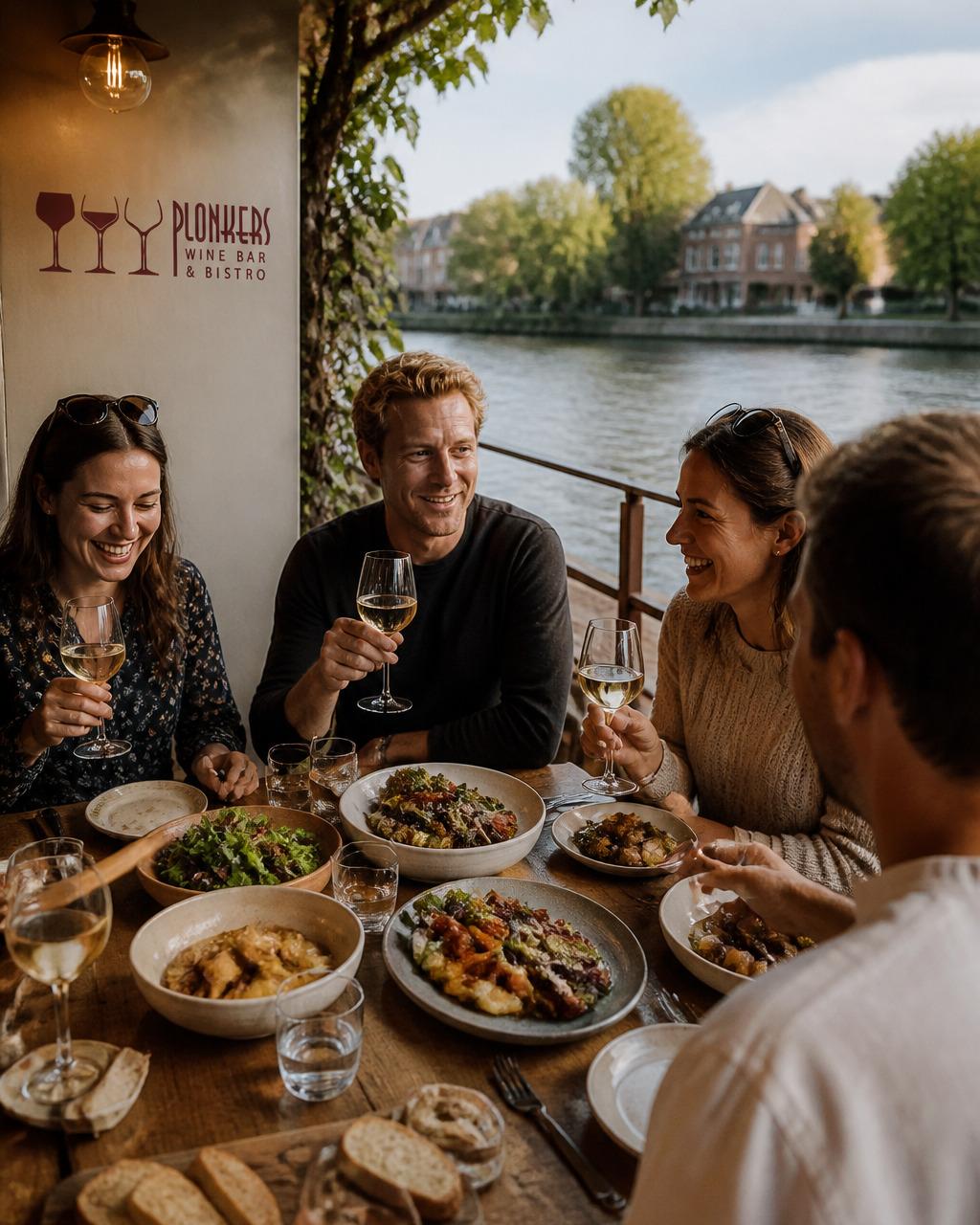
Our menu uses locally sourced meat, fish and vegetables, and choosing local ingredients supports regional producers. You can read how event venues support local breweries and drinks makers in our full article.
Portion size matters too. Order based on confirmed numbers, and plan smaller plates with the option to order more. Leftovers are easier to avoid when you agree on quantities in advance.
“Our choice of ingredients and drinks is a big part of how the evening feels,” says our team. We support local breweries and drinks makers.
Reusable Event Decorations That Look Good on a Budget
Decorations are where small events quietly generate the most avoidable waste. A few balloons, a plastic banner and a foam-based centrepiece can fill a bin bag in an evening, and none of it breaks down. The good news is that the alternatives cost less over a handful of events and often look better in a small room. Reusable fabric, dried flowers and sustainable cake decorations can bring the same thoughtful finish to a small room without adding another bag of single-use waste.
Start with the three worst offenders and swap them out deliberately:
- Balloons. Latex balloons are marketed as biodegradable, but in practice they take months to break down and foil balloons never do. Replace a balloon arch or cluster with paper honeycomb balls, fabric bunting or a cluster of dried stems in a floor vase. All three pack flat and can be reused.
- Plastic and vinyl banners. A printed vinyl banner is used once and then rolls up in a cupboard forever. A cloth banner or a chalkboard sign does the same job, can be rewired or relettered for the next event, and photographs better in low light.
- Floral foam. Oasis-style foam is single-use, sheds microplastics and is not accepted in most kerbside garden waste collections. Ask your florist for arrangements built in water, on a reusable pin holder, or in a jam-jar cluster instead. If you are arranging yourself, chicken wire scrunched into a vase holds stems just as well and lasts for years.
For the rest of the room, lean on items you already own or can borrow:
- Candles in glass jars that go back in the cupboard afterwards
- Fresh flowers from a local florist, composted the following week
- Cloth napkins and tablecloths rather than paper
- Table decorations borrowed from a previous celebration or a neighbour
- Potted herbs or small plants that guests can take home as favours
A small investment in reusable items pays off after a few events. Store them somewhere dry and label the box so you are not tempted to rebuy next time.
Check the local council’s waste guidance before assuming a “biodegradable” product can go in garden waste.
The article compares common decoration items with reusable alternatives:
| Item | Reusable alternative | Key point |
|---|---|---|
| Latex balloons | Paper honeycomb balls, fabric bunting | Latex takes months to break down |
| Foil balloons | Dried stems in a floor vase | Foil balloons never break down |
| Plastic or vinyl banners | Cloth banner or chalkboard sign | Reusable and relettered for next event |
| Floral foam | Water-based arrangements, reusable pin holder | Single-use and sheds microplastics |
| Disposable paper napkins | Cloth napkins and tablecloths | Reusable across events |
Budget-Friendly Sustainability and Choosing a Venue You Can Trust
Sustainability does not have to cost more, and many of the best choices, such as local food and reusable items, can be planned around your budget.
Where the money actually goes:
- Ask whether reusable glassware and crockery are included
- A shorter, seasonal menu reduces both food waste and the venue’s procurement cost
- Digital invitations and RSVPs remove printing and postage entirely
- A venue within walking distance of public transport removes the need for a minibus or taxi run
Choosing a venue you can trust matters just as much, and small independent venues often cannot show a formal green certification. That does not mean they are not sustainable, it means you need to ask better questions. Use this short vetting checklist when you speak to a small local venue or supplier:
- Sourcing: Can they name two or three of their regular suppliers, and are those suppliers local? A venue that can name them is usually telling the truth about the rest.
- Waste: Do they separate food waste, glass and cardboard, and who collects it? Ask to see the bins if you are visiting.
- Kit: Do they use reusable glassware, crockery and cutlery as standard, or only on request?
- Menu flexibility: Can they scale portions to confirmed numbers, and can they adapt for vegan or other dietary needs without a separate order?
- Travel: How close is the nearest bus stop, cycle route or train station, and do they have covered cycle parking?
- Leftovers: Will they pack surplus food for guests to take home, or do they have a food-waste arrangement with a local group?
A good venue will answer these clearly and suggest options that fit your budget. A vague answer on two or three of them is a signal to look elsewhere.
Pricing depends on the menu, date and group size, so please check our website for current prices or a quote.
Questions to ask any venue:
- Where do your ingredients come from?
- Do you offer reusable glassware and crockery?
- How do you sort waste and recycling?
- Can you adapt the menu for vegan or other dietary needs?
- Can you name a supplier you have used for more than a year?
Booking Your Next Celebration at Plonkers Wine Bar
Plonkers Wine Bar is a family-run bistro on the York riverside, serving home-cooked food with locally sourced ingredients since the early 1980s. We are fully independent, so our choices about suppliers and waste are our own. Our menus change with the seasons, and we support local breweries and drinks makers throughout the year.
We welcome groups from six to 130 people, and our team can help you plan a relaxed event. Get in touch to discuss your date and numbers, and we will suggest options that suit your plans. book your private event with our team today.
Frequently Asked Questions
How can I make a small private event more eco-friendly?
Start with the guest list and the venue, then work outward. Choose a venue that sources ingredients locally and uses reusable crockery, invite guests digitally, and keep decorations reusable rather than single-use. Ask any caterer or venue where their food comes from and how they handle leftovers. Small gatherings give you more control than large ones, so a few clear choices, such as no disposable cups and a shared drinks menu, will make a real difference without adding cost or stress.
What are the best ways to reduce waste at a private event?
Focus on the three biggest sources: packaging, single-use tableware and food that goes uneaten. Serve food family-style or in set courses so portions match appetite, ask guests to confirm numbers in advance, and send leftovers home in reusable containers. Replace paper napkins with cloth, and set up a clearly labelled recycling and food waste bin. Planning these points before the day keeps waste low without needing extra equipment on the night.
Are digital invitations more sustainable than printed invitations?
Generally yes. Digital invitations avoid paper, printing, ink and postage, and they make it easy to update details or track replies in one place. Guests can respond with a click, which reduces follow-up messages. If you prefer a printed touch, choose recycled card, keep the design simple and avoid laminated or foil finishes, which are hard to recycle. Either way, sending invitations only to people who will genuinely attend reduces waste further.
How do I plan a low-waste party on a small budget?
Begin with a realistic guest count and a short menu, since overordering is the most common cause of waste. Borrow or reuse tableware and decorations, use seasonal produce, and agree on a clear plan for leftovers before the event. Many of the greenest choices, such as buying in bulk, cooking at home and avoiding throwaway decor, also reduce costs. A simple written checklist covering food, drink, decor, travel and cleanup keeps the plan on track.
