
Table of Contents
- What Defines Authentic Bistro Dining
- Hidden Gem Restaurants in York Worth Discovering
- Family-Run Restaurants in York: Why Independence Matters
- Home-Cooked Food in York: Locally Sourced and Honest
- Riverside Restaurants in York: Atmosphere and Setting
- Dining for Every Occasion: Casual to Special Events
- What to Expect from Authentic Bistro Service
- Frequently Asked Questions
Last Updated: October 8, 2026
What Defines Authentic Bistro Dining
Authentic bistro dining york is about independence, character, and quality over profit margins: home-cooked meals from local ingredients, served where regulars feel like family.
What separates authentic bistro dining from chains is the philosophy behind the counter: independent bistros answer to no shareholders, so the owner’s reputation is on the line every night.
At Plonkers Wine Bar, we’ve built this philosophy into everything since the early 1980s: locally sourced meat, fish and vegetables, a focused menu, and customers we know by name.
Key markers of authentic bistro dining include:
- Family ownership and long-term commitment to the community
- Seasonal menus that reflect what’s available locally
- A curated drinks selection, not mass-produced options
- Staff who genuinely care about your experience
- A space with history and character, not corporate design templates
Hidden Gem Restaurants in York Worth Discovering
Finding authentic bistro dining york means looking beyond the obvious choices, discovering hidden gem restaurants in York that prioritize quality over marketing.
A hidden gem sits slightly off the main tourist trail, the place locals recommend. It’s lasted years because the food and atmosphere are genuinely good, not because it chased trends.
What makes a true hidden gem isn’t obscurity but quality, consistency, and personality you can’t replicate: the owner is usually there most nights, the menu shifts with what suppliers bring in, and the wine list features bottles you won’t find everywhere.
Where to look, street by street
Think in terms of the pockets where independent bistros cluster:
- The Shambles and Whip-Ma-Whop-Ma-Gate area, heavily walked, but small bistros sit on the quieter side streets and courtyards just off it. Expect limited covers and a bias toward walk-ins at lunch.
- Micklegate and the streets running down to the river, long-established independents and newer kitchens, with the strongest concentration of French- and Mediterranean-leaning bistros.
- Goodramgate and the Minster quarter, convenient for pre-theatre and post-Minster meals, with small rooms that fill quickly on weekends.
- Bishophill and the streets south of the river, the most “local” pocket, with fewer tourists and more residents eating midweek.
- Fossgate and the streets around it, good for a relaxed evening, with several independent kitchens minutes apart.
Signals that a bistro is the real thing
When scanning listings, weight these markers:
- Consistently positive reviews from people who’ve returned multiple times, not one-off visitors
- A focus on seasonal, locally sourced ingredients, with named suppliers where possible
- Limited seating, often under 60 covers, sometimes under 40
- A drinks list that shows real knowledge and curation rather than a generic brand lineup
- Evidence the owner or head chef is actively involved in daily operations
- A menu short enough to be cooked to order rather than held under a lamp
Practical visit details to check before you go
Most independent bistros follow a similar rhythm, knowing it saves a wasted trip:
- Lunch service typically runs roughly 12:00-14:30, often with a shorter, cheaper menu than dinner.
- Dinner service usually starts around 17:30-18:00 and runs to about 21:30-22:00, with last orders earlier than closing.
- Closed days are common on Mondays and sometimes Tuesdays, always check before travelling.
- Booking is strongly advised for Friday and Saturday evenings and groups of six or more. Midweek lunch is usually walk-in friendly.
- Price bands for a two-course meal without drinks generally sit in the £20-£35 range, rising to £40+ for more ambitious kitchens. A glass of house wine typically lands between £6 and £9.
If you’re visiting on a Saturday, booking ahead is strongly advised.
How to tell a hidden gem from a hidden disappointment
Obscurity alone isn’t a virtue. A few checks separate the two:
- Look at the date distribution of reviews, not just the average. Recent reviews beat a high score built five years ago.
- Check whether the menu has changed since you last looked. Static menus often signal a kitchen that’s stopped engaging with suppliers.
- Read the negative reviews for patterns. One slow-night complaint is noise; repeated complaints about the same dish or front-of-house issue is signal.
- Confirm opening hours on the venue’s own site or social channels, not a third-party aggregator, independents change hours seasonally far more than chains.
A note on methodology
This guide prioritises bistros meeting the authenticity markers above, independent ownership, seasonal cooking, a curated drinks list, and genuine character. Venues are described, not ranked. Hours, menus and prices change frequently, so confirm details before you travel.
Family-Run Restaurants in York: Why Independence Matters
Family-run restaurants in York operate on a different model from chains: when your family name is on the door, you make different decisions.
A family-run restaurant pivots quickly: an exceptional delivery can change the menu that day, a regular’s dietary need gets solved rather than met with corporate policy, and problems get fixed because you’re invested.
Independence also means supporting other independents: family-run restaurants in York typically work with local breweries, farmers and producers, so your money stays local.
Family-run stability comes from reputation, not scale.
Why family-run restaurants matter:
- Owners are personally accountable for quality
- Decision-making is faster and more responsive
- Staff often stay longer, creating better service consistency
- Money spent stays in the local economy
- The business reflects the owner’s values, not a corporate mandate
Home-Cooked Food in York: Locally Sourced and Honest
Home-cooked food in York means something specific: not “homestyle” food from an industrial kitchen, but food made by someone who cares about ingredients and technique.
Locally sourced ingredients aren’t a slogan in authentic bistros but a practical choice: a chef who works with local suppliers knows the farmer, knows when vegetables peak, and builds relationships that inform the menu.
Home-cooked food also means honest portions and flavours. No foam, no molecular gastronomy tricks, no unpronounceable ingredients, just good food, properly cooked, served generously.
The difference shows on the plate: home-cooked food has a texture and depth mass-produced meals can’t match, because the fish was fresher and the vegetables chosen for flavour, not appearance.
What to expect from home-cooked food in York:
- Generous portions that reflect the chef’s respect for the ingredient
- Seasonal menus that change based on what’s available
- Simple preparation that lets the ingredient shine
- Staff who can tell you where the food came from
- Prices that reflect quality, not artificial discounting
Riverside Restaurants in York: Atmosphere and Setting
The riverside location in York offers something most restaurants can’t manufacture: water, light, history, and the sense of being part of something larger than the meal.
Riverside restaurants in York benefit from natural beauty: the River Ouse has shaped the city for centuries, and dining beside it connects you to that history.
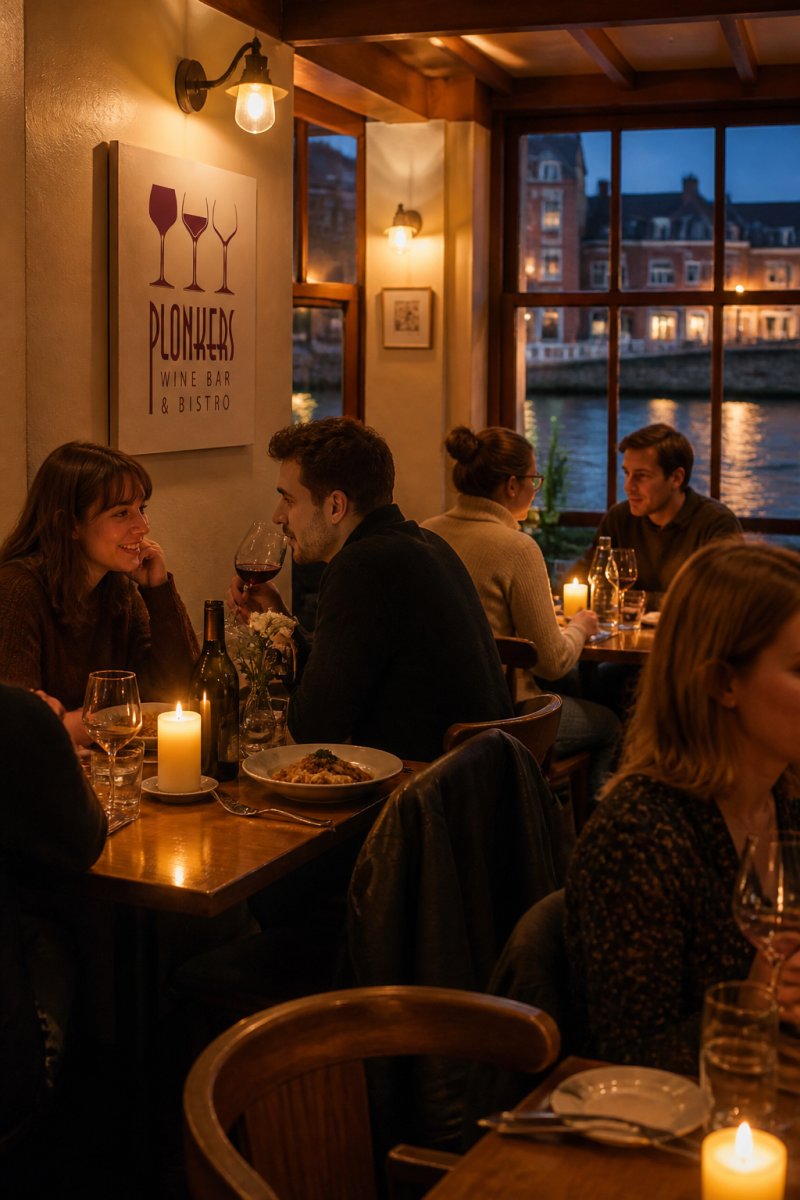
Atmosphere in a riverside bistro comes from the space itself: original beams, stone walls and period features create permanence.
Atmosphere elements that matter:
- Natural light and views of the water
- Historic architectural features that tell a story
- Comfortable seating that encourages lingering
- Appropriate noise levels for conversation
- Staff who understand the pace of a good meal
Dining for Every Occasion: Casual to Special Events
Authentic bistros in York work for everything from a weeknight dinner to a celebration, same space, same kitchen, different energy. The trick is matching the occasion to the room: a candlelit 30-cover bistro is wonderful for an anniversary and awkward for ten.
Matching the occasion to the room
Weeknight dinner for two. Look for a short, changing menu and a by-the-glass wine list.
Relaxed lunch. Many independents run a shorter, cheaper lunch menu, often two courses for around £15-£22.
Small group celebration (6-10). Independent bistros handle this well because the owner can flex.
Christmas and seasonal celebrations. These book out earliest of all, often from late September for December dates.
Dietary needs: what to ask and when
Independent bistros are generally more flexible than chains on dietary requirements, but the flexibility depends on how much notice you give them.
- Vegetarian, almost always covered, but the quality varies. Ask whether the vegetarian option is a genuine dish or an adapted side.
- Vegan, call ahead. A kitchen cooking from scratch can usually adapt, but a short menu built around butter and cream needs warning.
- Gluten-free, ask specifically about cross-contamination in the fryer and about sauces thickened with flour. Most independents will talk you through it honestly.
- Allergies, mention these at the time of booking, not on arrival. A small kitchen can plan; it can’t always improvise safely at 20:00 on a Saturday.
For any serious allergy, confirm by phone rather than through an online booking note. Small kitchens often don’t see the note until the day of service.
Accessibility and practical considerations
York’s historic buildings are part of the charm and part of the problem. Many bistros sit in listed properties with narrow doorways, stepped entrances, and toilets up a flight of stairs. Before booking:
- Ask whether there is step-free access from the street to the dining room.
- Ask where the toilets are relative to your table.
- Ask whether there is space for a wheelchair or pushchair beside the table rather than at the end of a narrow aisle.
- If you need a quiet table, say so, corners and booths exist but aren’t offered by default.
Booking mechanics that save you a wasted evening
- Phone for anything unusual. Online systems handle a table for two on a Tuesday; they handle a group of nine with two vegans less well.
- Confirm the day before for weekend bookings, especially in December.
- Arrive on time. Small kitchens time courses from the moment you sit down; a 20-minute delay on a full Saturday affects every table after you.
- Cancel if your plans change. Independent bistros lose real money on no-shows in a way chains don’t.
A rough budget guide
Pricing depends on quantity, dates, and delivery. Please check our website for current prices.
Prices move with supplier costs, so treat these as a planning guide rather than a quote.
The single most useful thing you can do is match the size and mood of your group to the size and mood of the room. A 30-cover bistro is a brilliant venue for four people and a difficult one for fourteen.
What to Expect from Authentic Bistro Service
Real bistro service comes from training and care.
Expect service that reflects the restaurant’s values: prioritise quality ingredients and the service prioritises your experience; value independence and staff can solve problems without asking a manager.
Service standards at authentic bistros:
- Staff who know the menu and can make genuine recommendations
- Attention to detail without being intrusive
- Flexibility to accommodate dietary needs or preferences
- Appropriate pacing that matches your meal
- Genuine warmth that feels authentic, not scripted
Finding authentic bistro dining in York means looking for independence, quality, and genuine care.
At Plonkers Wine Bar, we embody these values. We’ve been family-owned since the early 1980s. We source locally. They’re how we operate. Learn more about authentic dining experiences.
Frequently Asked Questions
How can you tell whether a bistro is authentic and independent?
Authentic bistro dining means locally sourced ingredients, home-cooked food prepared on site, and staff who genuinely care about the dining experience. Independent venues aren’t tied to chains or suppliers, which means menus change with seasonal availability and kitchen decisions reflect the owners’ values. Look for restaurants that highlight their suppliers, feature regular specials, and have been established long enough to build real relationships with their community. Staff enthusiasm and visible kitchen activity are good signs too.
What should you look for in an authentic bistro?
Seek out family-run restaurants where owners are present and invested in consistency. Authentic bistros offer home-cooked food prepared fresh daily, not mass-produced dishes. Check for menus featuring local producers, seasonal changes, and honest descriptions of what’s on the plate. Atmosphere matters: charming, unpretentious spaces with character often signal authenticity more than polished corporate design. Read customer reviews for mentions of food quality, staff knowledge, and memorable experiences rather than just ratings.
Are there independent riverside restaurants offering authentic dining?
Yes. Riverside locations in York offer a unique setting for authentic bistro dining, combining scenic views with intimate, locally focused menus. Independent riverside venues often source from nearby producers and feature seasonal menus that reflect what’s available locally. These restaurants typically maintain smaller, more personal operations where owners can oversee food quality and service directly. The riverside setting itself adds to the charm and unique dining experience that characterises authentic bistro culture.
How far ahead should you book a popular authentic bistro?
Booking ahead for weekends and special occasions is advised. During peak seasons (Christmas market period, theatre season, special events), booking in advance is recommended. Many authentic bistros handle reservations personally by phone rather than online platforms, which allows staff to understand your needs and preferences. Calling direct also lets you ask about dietary options, special occasions, or group arrangements.