Table of Contents
- Why Accessible Restaurants in York Centre Are Hard to Find
- Equality Act 2010 Restaurant Requirements: What Venues Must Do
- How to Use AccessAble Restaurant Guides Before You Book
- What to Check When Assessing Any Accessible Restaurant
- Booking Accessible Tables: How to Get It Right
- Independent Venues Worth Knowing for Accessible Dining
- Plonkers Wine Bar: Accessible Riverside Dining in York
- Conclusion
Last Updated: August 14, 2026
Why Accessible Restaurants in York Centre Are Hard to Find
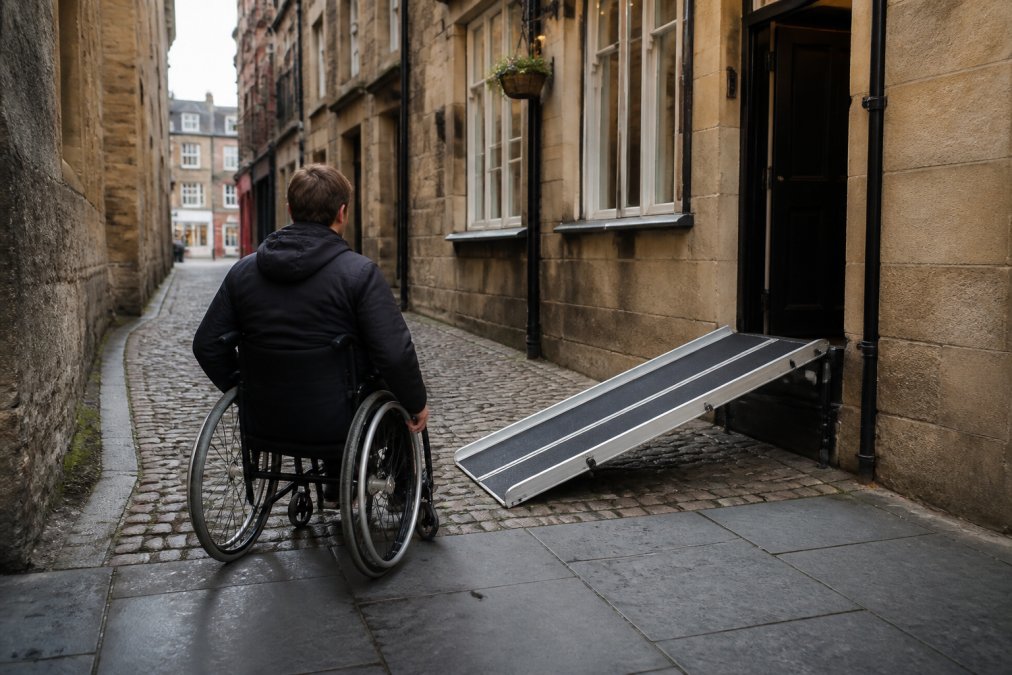
Finding accessible restaurants in York centre is genuinely difficult. The city’s extraordinary architectural heritage, which draws millions of visitors annually, is also its biggest accessibility challenge. Medieval buildings were not designed with wheelchair users, ambulatory disabled people, or those with mobility aids in mind.
This guide from Plonkers Wine Bar brings together practical, honest advice for anyone planning an accessible dining experience in the city centre. Below, we cover what the law actually requires of venues, how to use accessibility databases before you book, what questions to ask, and which independent venues genuinely deliver on their promises.
Historic Architecture and Its Impact on Wheelchair Access
A significant proportion of York’s eating and drinking venues occupy listed buildings, which means structural alterations require listed building consent and are often refused. Doorways are narrower than modern standards recommend. Floors are uneven. Entrances are set above street level, with steps predating any concept of ramped access. The result is a city centre where wheelchair accessible venues are genuinely fewer than in comparable-sized modern towns, and where the accessible route to a venue can be completely different from the main entrance.
Cobbled Streets, Threshold Heights, and Ground Floor Dining
Cobbled streets create real physical barriers for wheelchair users: vibration, instability, and fatigue. The Shambles and surrounding medieval lanes are among the most photographed streets in the country and among the most difficult to navigate in a wheelchair or with a pushchair.
A step of even 15mm can prevent independent access for a wheelchair user. Ground floor dining is the baseline requirement for any venue that wants to be genuinely inclusive, because lifts in historic buildings are rare, frequently out of service, and often too small for a standard powered wheelchair.
Equality Act 2010 Restaurant Requirements: What Venues Must Do
The Equality Act 2010 places a clear legal duty on restaurants and food service businesses to make reasonable adjustments for disabled customers. This is not optional guidance, it is a legal requirement that applies to every food and beverage business operating in England, Scotland, and Wales, regardless of the age or listed status of the building.
According to the Equality Act 2010 guidance on service providers, service providers must anticipate the barriers disabled people face and remove them where it is reasonable to do so.
Reasonable Adjustments and What They Mean in Practice
A reasonable adjustment is any change that removes or reduces a barrier a disabled person faces when accessing a service. For a restaurant, this might include providing menus in large print, training staff to assist wheelchair users to a suitable table, repositioning furniture to create a clear accessible route, or installing a portable ramp at the entrance.
Venues cannot claim that listed building status automatically exempts them from the duty. The Equality and Human Rights Commission guidance on reasonable adjustments is clear that the duty applies even where alterations to the fabric of a building are restricted. A restaurant with a stepped entrance should have a portable ramp available and staff trained to deploy it. Transparency about limitations is itself a form of reasonable adjustment.
Do not assume that a venue’s website accessibility statement reflects current reality. Always call ahead and speak to someone directly before your visit.
How to Use AccessAble Restaurant Guides Before You Book
AccessAble is the most detailed accessibility database available for venues across the UK. It provides independently surveyed access information for thousands of venues, including restaurants, cafes, and bars. The AccessAble venue accessibility surveys cover door widths, threshold heights, toilet dimensions, parking proximity, and staff awareness. Each survey is carried out by trained surveyors, not self-reported by the venue, making the data significantly more trustworthy than what most venues publish on their own websites.
What AccessAble Listings Tell You (and What They Don’t)
AccessAble listings are detailed and specific, providing exact door widths in millimetres, whether there is a level or ramped approach, the distance from the nearest accessible parking bay, and whether the accessible toilet is self-contained or shared.
What they do not always tell you is whether the ramp is actually in place on a given day, whether the accessible toilet is currently in working order, or whether trained staff are on shift. Real-time accessibility status remains the gap no database has fully solved. This is why calling ahead remains essential, even when you have done your AccessAble research.
When you call a venue, ask specifically: “Is your accessible entrance in use today, and is your accessible toilet available?” These two questions cut through vague reassurances and give you the information that actually matters.
What to Check When Assessing Any Accessible Restaurant
A structured checklist approach saves time and prevents disappointment.
| What to Check | Why It Matters | How to Verify |
|---|---|---|
| Entrance door width | Standard wheelchairs need at least 800mm clear width | Call the venue or check AccessAble |
| Threshold height | Steps over 15mm block independent access | Ask for a photo if unsure |
| Ground floor dining | Lifts in historic buildings are often unreliable | Confirm by phone |
| Accessible toilet | Essential for visits over an hour | Ask for dimensions if needed |
| Blue badge parking proximity | Long distances reduce access for many users | Check venue website or Google Maps |
| Staff disability awareness | Affects quality of the whole visit | Gauge from the phone call itself |
Entrance and Door Width
The entrance is where many accessible dining experiences end before they begin. A door width of at least 800mm clear opening is the generally accepted standard for wheelchair access. Beyond width, consider the weight of the door, whether it is self-closing, and whether there is a level approach or a threshold to manage. A portable ramp deployed on request is a reasonable adjustment, provided staff are trained to use it and it is actually available.
Accessible Toilet Facilities and Spatial Layout
An accessible toilet requires sufficient turning space for a wheelchair, correctly positioned grab rails, a lowered washbasin, and ideally a Changing Places facility for users with more complex needs. Spatial layout inside the dining area matters as much as the toilet. Tables that are too close together prevent wheelchair users from reaching their seat independently. The best venues have thought about the whole dining experience, not just the entrance.
Staff Disability Awareness and Customer Support
Staff training is the invisible accessibility feature that no survey can fully capture. A venue with a slightly awkward entrance but genuinely well-trained, attentive staff will deliver a far better experience than one with perfect facilities and indifferent staff. Disability awareness training covers practical skills and attitudinal ones. The quality of a venue’s staff training often reveals itself in the first phone call.
Booking Accessible Tables: How to Get It Right
Booking accessible tables requires a short, specific conversation with the venue before you confirm. Most problems with accessible dining experiences stem from inadequate communication at the booking stage, not from bad intentions.
Questions to Ask Before You Confirm
- Is your main entrance step-free, or do you have a portable ramp available?
- What is the width of your accessible entrance door?
- Is your accessible toilet available and in working order?
- Can you accommodate a wheelchair at a standard table, or is there a specific accessible table you would recommend?
- Is the accessible table near the entrance, or does reaching it require navigating through a crowded dining room?
- Do you have large print menus or digital menus available?
A venue that answers confidently and specifically is one that has thought about accessibility. A venue that hedges or cannot answer basic questions is one to approach with caution.
Blue Badge Parking and Public Transport Links
Blue badge parking proximity is a significant factor for many disabled diners. The York City Council blue badge parking information lists current designated bays and any temporary suspensions. Public transport links are worth considering as an alternative. Many accessible buses serve the city centre, and the railway station has full step-free access throughout.
The most accessible dining experiences in any historic city centre are usually found near the river or on the periphery of the medieval core, where buildings tend to be younger and street surfaces more manageable.
Independent Venues Worth Knowing for Accessible Dining
Independent venues in the city centre vary widely in their accessibility. Venues that occupy purpose-built or substantially renovated premises tend to offer better access than those in untouched medieval buildings. Riverside locations often benefit from level access approaches because the riverside paths themselves are generally surfaced and maintained. Venues that actively promote their accessibility information are usually the ones that have something worth promoting.
Plonkers Wine Bar: Accessible Riverside Dining in York
Plonkers Wine Bar sits on the York riverside and has been family-owned and run since the early 1980s. For anyone seeking accessible restaurants in York with genuine character and a welcoming atmosphere, the riverside location is a practical as well as a scenic advantage.
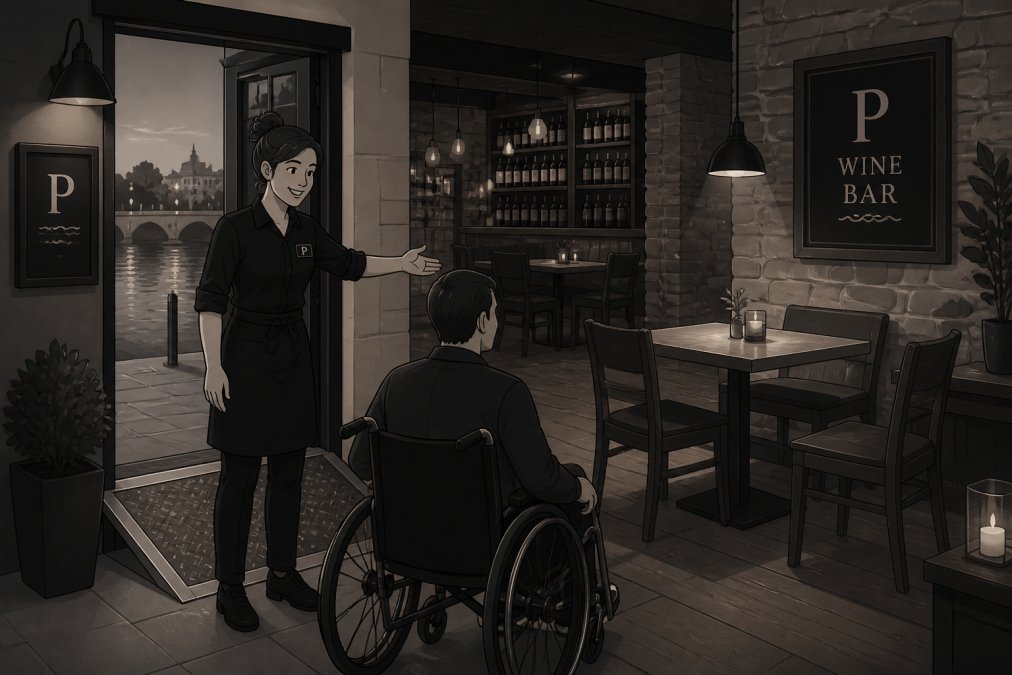
The riverside approach avoids the most challenging cobbled streets of the medieval centre, and the venue’s independent status means decisions about customer experience are made by the people who actually work there. Plonkers Wine Bar serves home-cooked food made from locally sourced ingredients, with a menu that accommodates veganism seriously. The extensive selection of specialist beers, wines, and spirits sourced in partnership with local breweries means the drinks list is as considered as the food. Live music and open mic nights run regularly, making it a venue worth visiting more than once.
For groups, the space accommodates from small tables up to larger gatherings, which makes it a practical choice for event organisers who need a venue that can handle varied requirements without the rigidity of a chain restaurant’s booking system.
To discuss accessibility requirements or specific needs before your visit, contact Plonkers Wine Bar directly. The team’s approach to customer support is best judged by speaking to them.
Accessible dining in a historic city centre requires more planning than most guides acknowledge. The combination of listed buildings, cobbled streets, and limited structural flexibility means that no single resource replaces a direct conversation with the venue before you arrive. Plonkers Wine Bar offers riverside dining with the warmth, home-cooked quality, and genuine independence that makes that conversation worth having. BOOK NOW at Plonkers Wine Bar and experience what inclusive, community-focused dining actually looks like in practice.
Frequently Asked Questions
Is York suitable for wheelchair users?
York can be challenging for wheelchair users due to its medieval street layout and cobbled surfaces, but many venues have made genuine improvements. Step-free access, ramped entrances, and accessible toilet facilities are increasingly common in city centre restaurants. Checking AccessAble listings and contacting venues directly before visiting will give you the clearest picture of what to expect. Blue Badge parking bays are available close to the city centre, and several public transport options offer level access boarding.
Do restaurants have to provide disabled access under UK law?
Under the Equality Act 2010, restaurants in the UK are legally required to make reasonable adjustments to avoid putting disabled customers at a substantial disadvantage. This includes physical access where structurally feasible, accessible toilet facilities, and staff trained to assist. Historic buildings may have listed status that limits structural changes, but venues must still explore every reasonable option. Refusing entry or failing to accommodate a disabled guest without justification can constitute unlawful discrimination under the Act.
How can I verify if a restaurant has step-free access before booking?
The most reliable method is to check the venue's AccessAble listing, which records specific measurements such as door width, threshold height, and accessible route details. Calling the restaurant directly is equally useful, as staff can confirm real-time accessibility status, including whether portable ramps are available or if accessible toilet facilities are currently in service. Many venues also publish accessibility information on their own websites. Booking in advance gives you the opportunity to request specific seating arrangements that suit your mobility aid.
What features should I look for when assessing a restaurant's accessibility?
Start with the entrance: check for level access or ramped access, and confirm the door width is wide enough for your mobility aid (typically at least 800mm clear). Ask about ground floor dining options so you are not reliant on a lift. Accessible toilet facilities with adequate turning space are essential for longer visits. Also ask about the spatial layout between tables, staff disability awareness, and whether the venue has an emergency evacuation plan that accounts for wheelchair users. Proximity to Blue Badge parking and public transport links matters too.
How do I request specific seating arrangements for accessibility needs when booking accessible tables?
When booking accessible tables, note your requirements clearly in the booking form or call ahead to speak to a member of staff. Be specific: mention your mobility aid, whether you need a wider aisle, proximity to the accessible toilet, or a table without fixed seating. Confirm the arrangement again a day before your visit. Independent venues, in particular, are often more flexible than chains and can adjust their spatial layout to accommodate you, especially if given advance notice.
Are there resources for checking the accessibility of historic buildings used as restaurants?
AccessAble restaurant guides are the most detailed resource available, providing venue-specific data on entrance steps, door widths, toilet dimensions, and parking proximity. Historic England also publishes guidance for listed buildings on balancing conservation requirements with accessibility improvements. For venues in areas with cobbled streets or medieval architecture, it is worth checking whether the local authority has published an accessible tourism map, as some councils have produced visual accessibility mapping for city centres.
This article was written using GrandRanker