Last Updated: November 7, 2026
Quick Summary
Acoustic music is unamplified or lightly amplified performance built around guitar, voice and close harmonies, while jazz nights centre on improvisation, larger ensembles and instrumental interplay. Acoustic sets sit underneath conversation, while jazz asks you to lean in and listen. That single distinction drives volume, seating layout, how late the night runs and who turns up.
- Acoustic sets rarely need much equipment: a guitar, a voice and a small amp cover most rooms.
- Open mic formats rotate performers every few songs, so the room’s energy resets constantly.
- Jazz lineups are often fixed for a night and sets can run for a substantial length.
- Jazz nights often start later than acoustic sets and can run longer.
- A birthday dinner with twelve people needs talk-friendly acoustic music, while a date where music is the point suits a jazz set.
Table of Contents
- Acoustic Music vs Jazz Nights: What Actually Changes Your Evening
- Acoustic Music vs Jazz Nights: The Core Difference
- Acoustic Events in York: Guitars, Open Mics and Close-Up Sets
- Jazz Nights in York: Quartets, Blues and Late-Set Energy
- Live Music Venues in York: Pubs, Bars and Riverside Rooms
- Matching the Night to the Occasion: Dinner, Dates and Groups
- Live Music Booking Tips: Free Entry, Tables and Timing
- Book a Riverside Table for Your Next Music Night
- Frequently Asked Questions
Acoustic Music vs Jazz Nights: What Actually Changes Your Evening
Choosing between acoustic music and a jazz night comes down to one thing: how much attention you want to give the performance. Acoustic sets sit underneath conversation, while jazz asks you to lean in and listen. The difference in how a night unfolds between the two formats is sharper than most listings admit.
Below, we break down how sound, audience and timing shift between the two, so you can pick the right night for the right occasion.
Acoustic Music vs Jazz Nights: The Core Difference
Acoustic music is unamplified or lightly amplified performance built around guitar, voice and close harmonies, while jazz nights centre on improvisation, larger ensembles and instrumental interplay. The first is background with presence. The second is the main event.
That single distinction drives everything else: volume, seating layout, how late the night runs and who turns up.
| Factor | Acoustic Night | Jazz Night |
|---|---|---|
| Typical lineup | Solo singer, duo, open mic | Trio to quartet, guest musicians |
| Volume | Low, talk-friendly | Moderate, listen-first |
| Best for | Dinner, dates, weeknight drinks | Occasions, music-led evenings |
| Set length | Short sets, rotating acts | Longer continuous sets |
| Entry | Usually free | Sometimes ticketed |
Sound and Performance Format
Acoustic sets rarely need much equipment. A guitar, a voice and a small amp cover most rooms, which keeps the sound soft enough for a table of four to talk without raising voices. Open mic formats rotate performers every few songs, so the room’s energy resets constantly.
Jazz works differently. A piano-led quartet fills more sonic space, and solos reward silence from the audience. Expect a fixed set list with room for improvisation rather than a rotating cast of performers.
Atmosphere and Audience
Acoustic crowds are mixed: couples, small groups, people who came for food first and music second. Jazz audiences tend to arrive deliberately, stay seated and listen through entire numbers.
Neither is better. They suit different moods, and knowing which you want saves a wasted evening.
Acoustic Events in York: Guitars, Open Mics and Close-Up Sets
Acoustic events in York tend to take a few common forms, including open mic nights, duo sets and small acoustic bands. Listings usually give names and dates, but the room itself can change how an act sounds, which is worth considering when planning.
The three acoustic formats you will actually encounter
Open mic nights are a common format in which performers sign up to play short sets, with the lineup rotating through the evening. Quality varies from first-timers to experienced musicians.
Duo and trio sets are booked acts rather than a rotating cast, typically featuring guitar and voice.
Small acoustic bands sit closest to jazz in setup, with several players performing a fixed set.
Why the room matters more than the act
The room a performance takes place in shapes how acoustic sound carries, with hard surfaces and soft furnishings affecting how far a voice or guitar reaches.
Seating layout matters too. Ask when you book how tables are arranged relative to the performance area.
Planning around an acoustic night
- Check the start time, not just the date. Confirm when the night begins before planning your arrival.
- Confirm whether it is sign-up or booked. If you are going to perform rather than watch, ask how the list works.
- Ask about table placement. Placement relative to the stage or speakers can affect your experience.
- Check accessibility before booking. Ask directly about step-free access, accessible toilets and space for a wheelchair or mobility aid.
- Verify the listing on the day. Event details can change, so check current information before you go.
Watch out: music nights can fill faster than ordinary evenings, so it is worth checking whether booking is needed.
For specific regular slots worth planning around, our guide to open mic nights in York lists them by day and venue.
Jazz Nights in York: Quartets, Blues and Late-Set Energy
Jazz nights often feature small combos such as piano trios and quartets. The music rewards attention, so keeping conversation low during solos is worth considering.
What a jazz night actually looks like
Jazz lineups are often fixed for a night and sets can run for a substantial length. Guest musicians may join, so each night can differ.
The format is listen-first. Solos reward silence, which means the room’s social contract is different from an acoustic night. Talking through a piano solo will draw looks. If your group wants to catch up over drinks, this is the wrong night.
Instrumentation can fill more space. Jazz instrumentation tends to cover a wider frequency range than a guitar and voice.
Timing: why jazz starts later and finishes later
Jazz nights often start later than acoustic sets and can run longer. If you are booking dinner around a jazz night, check the start and break times when you book.
Tickets, covers and what a jazz night costs
This is where the two formats diverge most sharply, and where most guides stay vague.
- Entry. Entry arrangements can vary by night, so check whether a jazz night is ticketed or free before you go.
- Food and drink. Check the menu and any minimum spend when you book.
The jazz night is the one where the music is the focus rather than the backdrop.
Planning around a jazz night
- Check whether it is ticketed or free. Do not assume; ask the venue or check the current listing.
- Ask about set times and the break. Confirm when sets start and finish.
- Confirm seating. Ask whether seating is reserved before you arrive.
- Check accessibility. Ask before booking about step-free access and accessible facilities.
- Verify the listing. Lineups can change, so check current details before you go.
If you are weighing up venues for a specific occasion, our curated guide to unique venues in York helps match the room to the night.
Live Music Venues in York: Pubs, Bars and Riverside Rooms
Live music venues in York fall into three broad types: pubs with a corner stage, city centre bars with a dedicated music room, and riverside rooms where dinner and performance share the same space. Each shapes the night as much as the genre does.
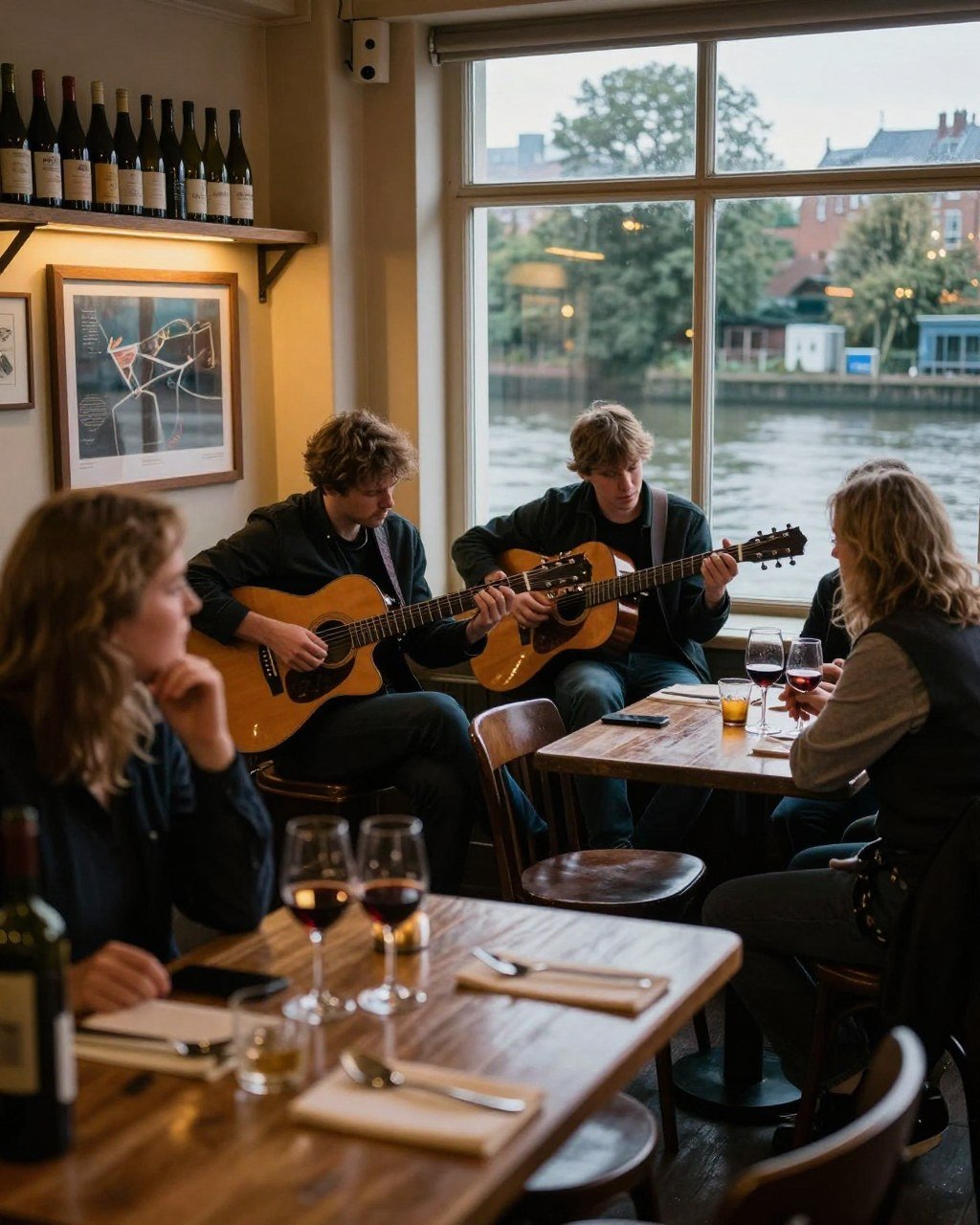
Different room types suit different formats. Riverside rooms can host both dining and live performance in the same space.
For a closer look at how riverside rooms compare with city centre music venues, see our riverside dining comparison.
Matching the Night to the Occasion: Dinner, Dates and Groups
Occasion should decide the genre, not the other way round. A birthday dinner with twelve people needs talk-friendly acoustic music. A date where music is the point suits a jazz set.
Weeknight Drinks and Quiet Dinners
Midweek evenings call for acoustic. Volume stays low, tables turn slowly, and you can hold a conversation across the table. Drinks prices and food menus usually matter more than the lineup on a Tuesday.
Celebrations and Larger Groups
Larger groups need space and a performance that does not demand silence. Acoustic duos work well here. For the practical side, our step-by-step guide to booking a table for large groups covers numbers, timing and what to confirm in advance.
If you are weighing up venues for a specific occasion, our curated guide to unique venues in York helps match the room to the night.
Live Music Booking Tips: Free Entry, Tables and Timing
Live music booking tips rarely mention the obvious: the music is often the easy part. The table is what needs planning.
- Check the event calendar first. Confirm the night is a gig, not background music.
- Consider booking a table. Music nights can fill faster than ordinary evenings.
- Ask about set times. Confirm start times when you book.
- Confirm entry arrangements. Check whether an event is free or ticketed.
- Mention group size when booking. Let us know your numbers so we can plan seating.
- Ask about dietary requirements in advance. Let us know your needs when booking.
Watch out: start times can vary, so check before you plan the evening around a music night.
Book a Riverside Table for Your Next Music Night
The best way to judge acoustic versus jazz is to sit in the room and hear both. At Plonkers Wine Bar, we host live music and open mic nights alongside home-cooked food made with locally sourced ingredients and a selection of specialist beers, wines and spirits. Our family-run riverside bar has welcomed guests since the early 1980s, and we are independent and untied to suppliers or chains.
If you are heading to the Grand Opera House beforehand, we have a first class pre-theatre food offering. From mid-November, our Christmas menu is available for prebooking, from couples through to full work parties.
Get started with Plonkers Wine Bar and book a table for a music night that suits the occasion.
Picking between acoustic and jazz is really a question about the evening you want, not the music you like. Decide how much talking, listening and staying late you have in mind, then book accordingly.
Frequently Asked Questions
What is the difference between acoustic music and jazz?
Acoustic music is played on unamplified or lightly amplified instruments such as guitar, piano and double bass, and covers folk, blues and singer-songwriter material. Jazz is a style rather than a setup: it relies on improvisation and swing, and often uses a piano-led quartet or trio. An acoustic night can include jazz, and a jazz night can be fully acoustic, so the two overlap. The practical difference is the feel: acoustic sets tend to be quieter and more song-focused, while jazz nights lean on extended instrumental solos.
Are acoustic events in York quieter than jazz nights?
Usually, yes. Acoustic sets are built around close listening, so volume stays low enough to talk over dinner. Jazz nights with a quartet, drums and brass push higher, especially in a packed bar. If conversation matters, ask the venue where the band is placed and whether the room has a separate dining area.
Do I need to book for live music nights?
It depends on the venue and the night. For dinner alongside the music, booking a table is worth considering, particularly at busier times. When you book, say you want a table for the live music and ask what time the set starts, so you are seated before the room fills.
Can acoustic music and jazz both suit a special occasion?
Both work, but they set different moods. Acoustic sets suit birthdays, relaxed anniversaries and pre-theatre dinners where guests want to talk. Jazz nights bring more energy and work well for celebrations where the music is part of the entertainment. For groups, ask the venue how the performance area and seating are arranged so the music suits your occasion.
