Last Updated: October 31, 2026
Quick Summary
Supporting local breweries and drinks makers means sourcing beer, cider, and spirits from independent producers in your region and building events around those relationships. Treat it as procurement first, storytelling second, because local supply means smaller volumes, shorter shelf life, and logistics you manage yourself.
- Start at the taproom, not the internet, since independent brewers are usually reachable directly.
- Place a modest order for a quiet week to test reliability before building an event around a producer.
- Cask beer needs a cool, still cellar and 24 to 48 hours to settle before tapping.
- Match container size to expected attendance because cask beer deteriorates within days of tapping.
- Track units sold, gross margin, event attendance, and repeat purchase rate for each partnership.
Table of Contents
- Why Supporting Local Breweries Works for Event Venues
- Finding the Right Local Drinks Suppliers for Events
- Building a Local Brewery Event Collaboration That Lasts
- Event Drinks Menu Ideas That Showcase Local Makers
- Sustainable Drinks Sourcing for Events Without the Greenwash
- Licensing, Responsible Service and Compliance for Local Drinks Events
- Measuring the Commercial Impact of Local Drinks Partnerships
- Booking a Local Drinks Event at Plonkers Wine Bar
- Frequently Asked Questions
Why Supporting Local Breweries Works for Event Venues
Supporting local breweries and drinks makers for event venues means sourcing beer, cider, and spirits from independent producers in your region and building events around those relationships.
The commercial case is straightforward. A drinks list guests cannot buy in every supermarket gives them a reason to return and to tell others.
There is a practical limit worth stating early. For a sense of how local sourcing fits the wider venue landscape, see this curated guide to unique event venues in York.
Finding the Right Local Drinks Suppliers for Events
The best starting point is the taproom, not the internet. Independent brewers and cider makers are usually reachable directly, and a short conversation tells you more than any supplier directory.
Where to Look Beyond the Taproom
Taprooms are the start, not the whole map. Farmers’ markets, food and drink festivals, and regional trade bodies are where smaller producers test the water before they have a website worth reading. County agricultural shows and local chamber of commerce events also put you in the same room as cider makers and distillers who supply quietly and consistently. For a shortlist, ask two or three producers you trust who else they rate, reputation travels fast in the independent drinks trade.
Assessing Capacity and Reliability Before You Commit
A producer who makes excellent beer but cannot deliver on a Friday afternoon is a risk, not a partner. Work through four questions before you place a first order:
- Production capacity. Ask their typical weekly output and how much is already committed to regular accounts. A producer with spare capacity in February may have none in December.
- Delivery capability. Establish whether they deliver in their own vehicle, use a courier, or expect you to collect. Collection sounds cheap until you cost in staff time and vehicle use.
- Lead times. Get a written lead time for a standard order and a separate one for a bespoke or seasonal product. Repeat orders should have shorter notice than first orders; if not, ask why.
Reliability is best tested small. Place a modest order for a quiet week and see how they handle it before you build an event around them.
Agreeing Ordering Terms
Put the commercial terms in writing even when the relationship is friendly. The points that matter are minimum order value, whether prices are fixed for a season or move with ingredient costs, payment terms, and what happens to unsold or faulty stock. Ask specifically about sale-or-return on cask beer: some small brewers will credit unopened containers, many will not. Agree who pays for delivery and whether there is a charge for small drops.
Delivery and Storage Practicalities
Local supply means you manage more of the logistics yourself. Cask beer needs a cool, still cellar and 24 to 48 hours to settle before tapping. Keg beer is more forgiving but still wants consistent temperature. Bottled and canned products need protection from light and heat, and spirits need secure storage away from strong smells. Agree a delivery window that fits your quiet hours, a Friday delivery during service is a problem.
What to Ask Before You Commit
Work through this checklist before signing anything:
- What is the minimum order, and does it change by season?
- Who delivers, on what days, and is there a delivery charge?
- How long does each product keep once opened?
A common mistake is ordering a full cask for a small gathering. Watch out: cask beer starts deteriorating within days of tapping, so match container size to expected attendance rather than to the discount on larger volumes.
Building a Local Brewery Event Collaboration That Lasts
One-off orders are transactions. Deepening these partnerships requires a shared commitment to quality that extends beyond the tap, ensuring that your venue remains aligned with the highest standards of sustainable alcohol production.
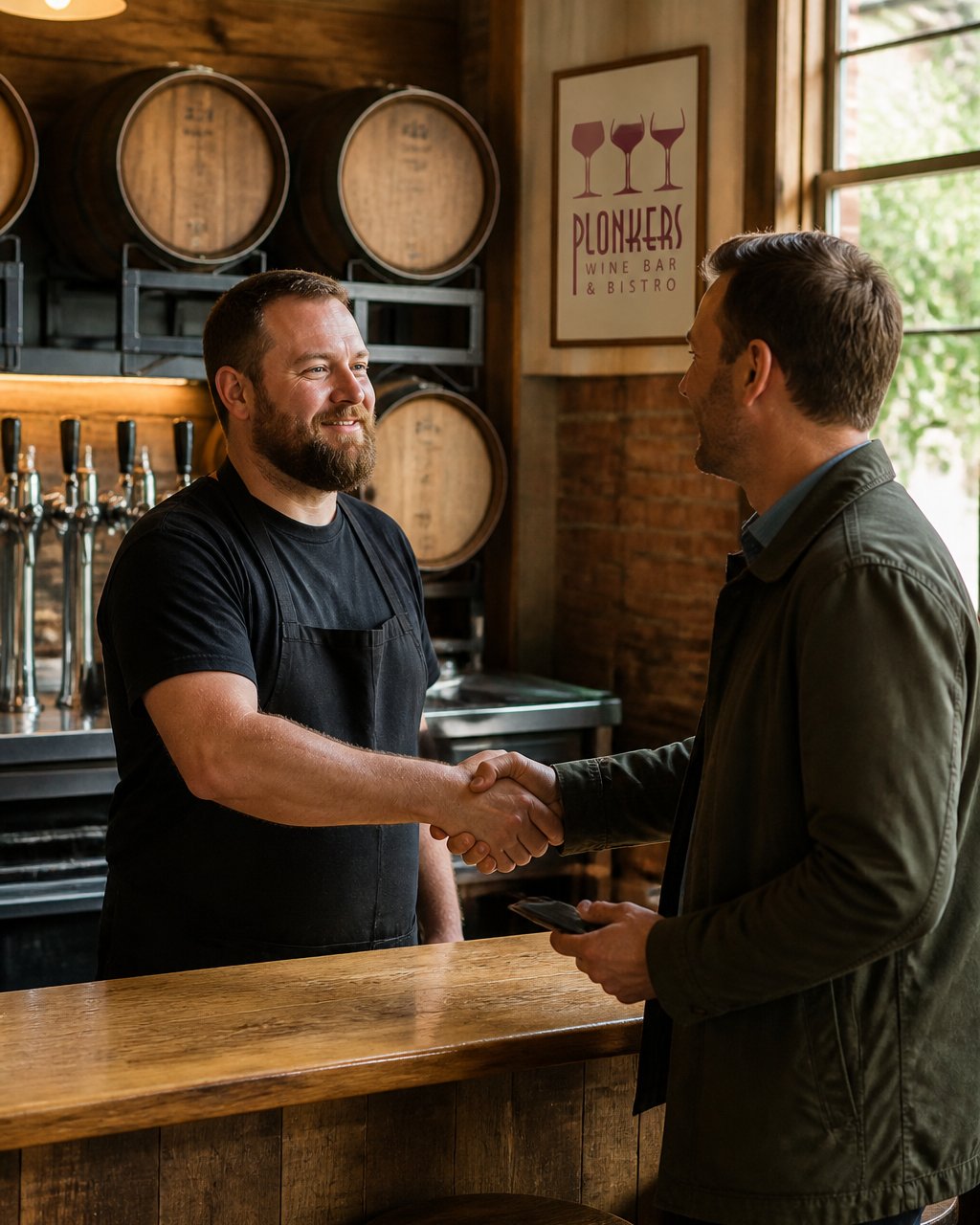
Start small: a single tap takeover, a tasting flight, or a brewer-hosted sampling session. If you also want to bring in local musicians for the event, see our guidance on finding local musicians for restaurants.
Partnership Models That Work for Both Sides
Three models cover most venue situations:
- Tap takeover. The brewer supplies a range for a fixed period and promotes it to their mailing list. You get footfall; they get exposure to a new audience.
- Meet-the-maker tasting. A ticketed or free sampling event with the brewer present. Works well midweek when covers are otherwise soft.
- Seasonal exclusivity. The brewer produces a small-batch beer or cider for your venue, and you feature it across a season. Higher effort, strongest differentiation.
Making the Terms Fair
A collaboration that only works for the venue will not last. Agree the commercial basis before the first event, in writing, even when the relationship is friendly. The usual structures are straightforward:
- Straight purchase. You buy at an agreed trade price and keep the retail margin. Simplest, and the producer carries no event risk.
- Revenue share. The producer supplies at a reduced price for a share of the bar take on their products during the event. Works when the producer is actively promoting and bringing their own audience.
- Guest tap or residency. The producer pays a modest fee or supplies product free for a defined period in exchange for visibility and direct sales to their customers. Suits a brewer with a new release to launch.
Whichever you choose, be explicit about who pays for what: delivery, staff time, glassware, printed menus, and any ticketing fees. Ambiguity here turns a good collaboration into a resentful one.
What the Producer Needs From You
Producers are small businesses with limited time. Make it easy for them to say yes. Give them firm dates, expected volumes, and a clear description of the audience. Send the assets they need, your logo, event details, opening hours, in a usable format rather than asking them to dig it out. Confirm who is responsible for promoting the event and by when.
What You Need From the Producer
Ask for the same in return. You need product samples for staff training, allergen and ingredient information in writing, and confirmation of insurance. You need to know how much stock they can commit to and when it will arrive. And you need their marketing support: a mention to their mailing list, a social post, and, ideally, the brewer on site for at least part of the event.
Keeping the Relationship Going
Review each collaboration after the event, not at the end of the year. Share the numbers that matter to the producer as well as to you: units sold, attendance, and how many guests asked about the product by name. Producers rarely get this feedback and value it.
These are the partnership models the article sets out, with what each one involves.
| Model | What happens | Key difference |
|---|---|---|
| Tap takeover | Brewer supplies a range for a fixed period and promotes it | Footfall for venue, new audience for brewer |
| Meet-the-maker tasting | Ticketed or free sampling event with the brewer present | Works well midweek when covers are soft |
| Seasonal exclusivity | Brewer makes a small-batch beer or cider for the venue | Higher effort, strongest differentiation |
| Straight purchase | Venue buys at agreed trade price and keeps retail margin | Simplest; producer carries no event risk |
| Revenue share | Producer supplies at reduced price for a share of bar take | Works when producer brings their own audience |
| Guest tap or residency | Producer pays modest fee or supplies product free for visibility | Suits a brewer with a new release to launch |
| Co-branded release | Both sides share cost of small-batch brew and marketing | Highest effort, strongest reason for customers to travel |
Event Drinks Menu Ideas That Showcase Local Makers
Build the menu so local products are the default, not a footnote. A dedicated local section on the list gets read; a single line at the bottom does not.
- Tasting flights. Three third-pint measures from three nearby producers, served with tasting notes. Low stock risk, high engagement.
- Brewer’s pairing menu. Match each course to a local beer or cider rather than wine. Works especially well for private dining.
- Cider and perry showcase. Often overlooked, and a genuine point of difference for autumn and winter events.
Sustainable Drinks Sourcing for Events Without the Greenwash
Sustainability claims are easy to make and easy to undermine. The credible version is unglamorous: shorter delivery distances, returnable containers, and less waste from over-ordering.
Focus on what you can evidence. Guests notice the difference, and the Competition and Markets Authority guidance on environmental claims sets out what counts as misleading.
The biggest sustainability gain for most venues is simply ordering accurately. Over-ordering wastes product, money, and the resources that went into making it.
Licensing, Responsible Service and Compliance for Local Drinks Events
Compliance is where enthusiasm meets reality. In England and Wales, the sale of alcohol requires a premises licence, and any event involving alcohol sales must operate within its conditions, including permitted hours and any capacity limits. The Home Office guidance on the Licensing Act 2003 explains the framework, and the Licensing Act 2003 itself is the governing statute.
Practical points that catch venues out:
- Check the current limits on temporary event notices for your premises, and plan the calendar early.
- Staff serving alcohol should be trained on age verification, and a refusal log is worth keeping.
- Free sampling events still count as supply, so the same rules apply.
Watch out: assuming a supplier’s own licence covers your event. It does not. The licence that matters is the one attached to the premises where the drinks are sold.
Measuring the Commercial Impact of Local Drinks Partnerships
Measure the partnership the way you measure any other supplier: against spend, margin, and footfall. A local product that sells slowly at a high price per unit is not automatically a win.
Track four things per partnership: units sold, gross margin against your standard range, attendance at any associated event, and repeat purchase rate. Review after each activation rather than annually. If a collaboration is not moving numbers after two events, end it politely and try another producer.
There is a softer metric worth recording too: how often guests ask about the product by name. That is the clearest signal that the local angle is doing commercial work rather than sitting on the menu as decoration.
Booking a Local Drinks Event at Plonkers Wine Bar
Plonkers Wine Bar is a riverside venue that has been family run and independent since the early 1980s, with a specialist beer, wine, and spirits selection.
Finding a venue that genuinely sources locally, rather than just saying so, takes more checking than most people expect. If you are still weighing up options, our guide on the steps to find the perfect wine bar near me can help you compare and book a venue.
Frequently Asked Questions
How can event venues support local breweries and drinks makers?
Start by stocking one or two local breweries or cider makers alongside your existing range, then build from there. Invite the maker to host a tasting or meet-the-brewer night, name them on your menu, and promote the collaboration on social media. Pay fair wholesale prices and agree volumes in advance so both sides can plan. Venues that treat local suppliers as long-term partners rather than one-off novelty buys tend to see stronger repeat attendance and better word of mouth.
How do venues find local breweries and drinks producers to work with?
Ask other independent venues, visit farmers’ markets and food festivals, and check regional brewery and cider maker associations. When you find a candidate, request a sample tasting, confirm their delivery radius and lead times, and check they can supply consistently at your event volumes. A short trial at one event is the safest way to test fit before committing to a full listing.
What are the benefits of serving locally made drinks at events?
Local craft beer and regional ales give guests a taste they cannot get from a national brand, which supports customer experience and gives people a reason to return. It also keeps more spend in the local economy and opens the door to joint promotion with the producer. For private events such as weddings and receptions, a local drinks story adds character that a standard package cannot match.
How can a venue feature local drinks without changing its whole menu?
You do not need to overhaul your range. Add one rotating local cask or a single local cider alongside your existing beers and wines, then highlight it with a short tasting note on the menu. A monthly guest tap or a seasonal special lets you test demand with minimal risk. Keep your core range stable so regulars still find their favourites.
What should venues ask a brewery before planning an event collaboration?
Ask about minimum order quantities, delivery frequency, lead times and whether they can supply casks or kegs in the sizes your cellar can hold. Confirm who covers the cost of samples, glassware and any branded materials. Agree how you will split promotion and who handles staff training on the range. Put the arrangement in writing, including what happens if an event is cancelled.
How can event organisers promote local drinks producers?
Name the producer on menus, table talkers and event listings rather than describing the drink generically. Share the maker’s story in a short paragraph, tag them in social posts, and let them reshare to their own audience. Invite the brewer or cider maker to attend a tasting so guests can meet the person behind the drink. Joint promotion usually reaches further than either party could alone.
