Last Updated: November 4, 2026
Quick Summary
The seven best local stout beers York drinkers should seek out in 2026 are three Brew York imperials (The Dream Child, A New Beginning and The Revenge), a milk stout, a barrel-aged stout, a seasonal dark release and a cask ale stout. We ranked them on provenance, flavour consistency, availability and value, grouping the list by style so you can pick a strength to suit the occasion.
- We ranked each stout on provenance, flavour consistency, availability and value, using availability as the tiebreaker.
- Brew York’s three imperials are The Dream Child, A New Beginning and The Revenge, priced from £6.50 to £7.00 per can.
- Milk stout is brewed with lactose, so it is not suitable for vegans despite its lower strength.
- Barrel-aged stouts appear on tap for short windows and in bottle shops in small numbers, so ask at the bar.
- Cask ale stout is served from the hand pump at cellar temperature, and quality varies by venue and turnover.
Table of Contents
- Why York’s Stout Scene Deserves a Proper Shortlist
- How We Chose and Ranked These Seven Stouts
- The 7 Best Local Stout Beers in York for 2026
- 1. Brew York The Dream Child Imperial Stout
- 2. Brew York A New Beginning Imperial Breakfast Stout
- 3. Brew York The Revenge Imperial Stout
- 4. Milk Stout: The Sweet, Sessionable Option
- 5. Barrel-Aged and Rum Barrel-Aged Stouts
- 6. Seasonal and Limited Edition Dark Beer Releases
- 7. Cask Ale Stout: The Pub Classic
- Brew York Stout: Inside the City’s Best-Known Brewery
- Finding Stout on Tap in York: Pubs, Taprooms and Beer Halls
- A Dark Beer Tasting Guide: How to Compare Stouts
- Where to Drink Local Stout This Week
- Frequently Asked Questions
Why York’s Stout Scene Deserves a Proper Shortlist
York’s beer scene has grown well beyond its famous railway heritage, and dark beer is now part of the story. This guide from Plonkers Wine Bar narrows the field to seven stout beers York drinkers should seek out in 2026, covering everything from imperial monsters to gentle cask classics. Tap lists change quickly, and visitors often arrive with a recommendation that went stale months ago. Below, we explain how we selected and ranked each stout, where to find them on tap or in bottles, and how to taste them side by side.
How We Chose and Ranked These Seven Stouts
We ranked these stouts on four criteria: local provenance, consistency of flavour, availability across pubs and bottle shops, and value for the strength on offer. Availability was used as a tiebreaker, since a stout you cannot find is less useful than a good one on a nearby tap. The list is grouped by style so drinkers looking for a session-strength dark beer can find one easily.
The 7 Best Local Stout Beers in York for 2026
The seven best local stout beers in York for 2026 are three Brew York imperials, a milk stout, a barrel-aged stout, a seasonal dark release, and a cask ale stout. Together they cover every strength and mood, from a slow-sipped anniversary beer to a pint you can have with lunch. Here is the full list, with tasting notes and honest drawbacks for each.
1. Brew York The Dream Child Imperial Stout
Best for: stout enthusiasts who want a bold, locally brewed imperial beer to share or cellar.
Pros: strong local provenance; genuine flavour depth for the price.
Cons: small-batch production means availability comes and goes.
Skip if: you want a pint-strength beer for a long session.
2. Brew York A New Beginning Imperial Breakfast Stout
Best for: drinkers who like dessert-forward stouts with coffee and chocolate character.
Pros: distinctive flavour profile; excellent craftsmanship.
Cons: the high alcohol content will not suit every palate.
Skip if: you prefer dry, bitter stouts over sweet ones.
3. Brew York The Revenge Imperial Stout
Best for: fans of traditional, heavy-hitting imperial stout with a roasted bite.
Pros: strong, authentic stout character; brewed locally.
Cons: the premium price point is the highest of the three.
Skip if: you find bitter, roasted flavours too aggressive.
4. Milk Stout: The Sweet, Sessionable Option
Best for: drinkers who want a gentle, lower-strength dark beer.
Milk stout is a dark beer brewed with lactose, which adds sweetness and body without extra alcohol (milk stout | The Oxford Companion to Beer). It is the style to order when you want the flavour of stout at a strength that lets you have a second pint. Look for milk stout on cask or keg in York’s independent pubs rather than in supermarkets, where local examples are harder to find. The roasted malt and chocolate notes should be soft, not sharp, and the finish should be creamy rather than dry.
Pros: lower strength; approachable sweetness.
Cons: lactose means it is not suitable for vegans.
Skip if: you avoid dairy or prefer dry, bitter beer.
5. Barrel-Aged and Rum Barrel-Aged Stouts
Best for: special-occasion drinking and anyone who enjoys spirit-forward flavours.
Barrel-aged stout spends time in wooden casks, picking up vanilla, oak, and spirit character (barrel-aging. | The Oxford Companion to Beer). Rum barrel-aged versions add dried fruit and a warm sweetness that plain imperial stout cannot match. These are limited edition beers by nature, so they appear on tap lists for short windows and in bottle shops in small numbers. ABV is usually high, so treat them as a slow sipping beer rather than a session pint. Ask at the bar what has just come on, because these releases rarely last long.
Pros: complex, layered flavour; genuinely special.
Cons: limited availability and higher prices.
Skip if: you dislike spirit or oak characters in beer.
6. Seasonal and Limited Edition Dark Beer Releases
Best for: regular drinkers who want something new each visit.
York’s breweries release seasonal dark beers through the autumn and winter, and these are where the most interesting experimentation happens. Coffee stouts, spiced porters, and dessert-inspired dark beers all turn up in limited runs. The practical advice is to follow the brewery taprooms and independent bottle shops rather than rely on a fixed list, because the beer you loved in November may be gone by January. When you find one you like, buy a second can for the cupboard. A well-chosen stout deserves proper beer glassware, which helps bring its roasted aromas and seasonal character to the fore.
Pros: variety and novelty; often award-winning.
Cons: inconsistent availability by design.
Skip if: you want the same reliable beer every time.
7. Cask Ale Stout: The Pub Classic
Best for: traditional pub drinking and pairing with hearty food.
Cask ale stout is served from the hand pump at cellar temperature, with low carbonation and a smooth, rounded texture. It is the most traditional way to drink dark beer and the style most tied to York’s pub culture. A good cask stout shows roasted malt, coffee notes, and a dry finish, and at session strength it pairs well with a long afternoon. Always ask whether the cask line is fresh, because cask beer is a living product and quality depends on how the pub keeps it (Why is beer quality so important to cask ale?).
Pros: lower strength; traditional serve; food-friendly.
Cons: quality varies by venue and turnover.
Skip if: you prefer cold, highly carbonated beer.
| Stout | Style | Strength | Typical Price | Best For |
|---|---|---|---|---|
| The Dream Child | Imperial stout | High | £6.50 per can | Sharing and cellaring |
| A New Beginning | Imperial breakfast stout | High | £6.75 per can | Dessert drinking |
| The Revenge | Imperial stout | High | £7.00 per can | Roasted, bitter fans |
| Milk stout | Sweet stout | Lower | Varies | Session drinking |
| Barrel-aged stout | Barrel-aged | Very high | Varies | Special occasions |
| Seasonal dark release | Varies | Varies | Varies | Trying something new |
| Cask ale stout | Cask stout | Session | Pub price | Traditional pub visits |
Brew York Stout: Inside the City’s Best-Known Brewery
Brew York is the brewery most associated with stout beers York has produced, and its imperial range anchors this list. The brewery built its reputation on big, flavour-led beers, and the anniversary collection that produced The Dream Child shows how seriously it treats dark beer. What most guides miss is how small some of these batches are. A stout that sells out in the taproom may never reach a bottle shop, so the taproom is often the only place to try a new release. If you are planning a visit, check the brewery’s own tap list before travelling, and go early in the week when fresh casks are usually tapped.
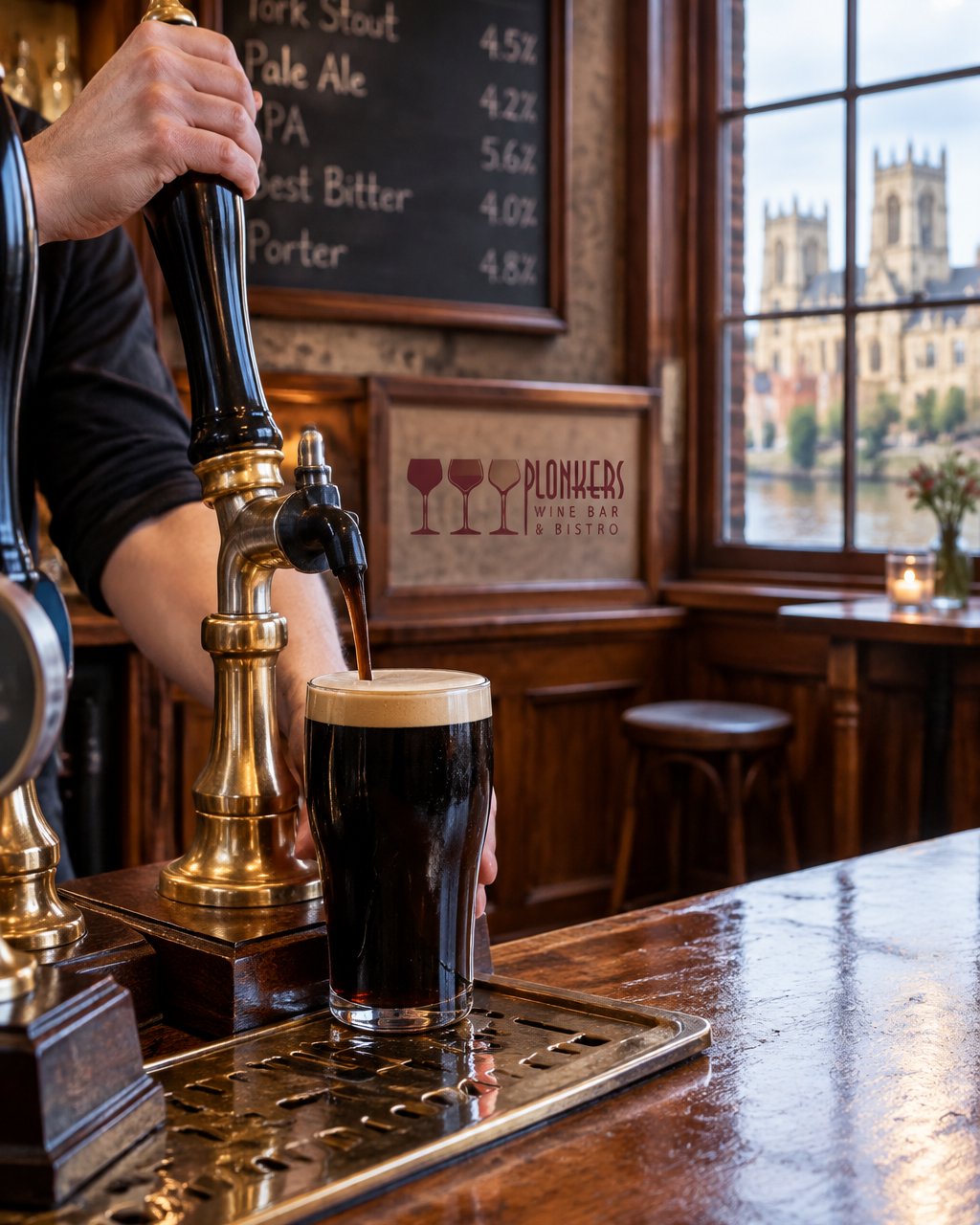
Finding Stout on Tap in York: Pubs, Taprooms and Beer Halls
If you are weighing up where to spend an evening, our guide to wine bars and pubs in the city centre sets out the differences in atmosphere and drink range.
A Dark Beer Tasting Guide: How to Compare Stouts
A dark beer tasting guide starts with three questions: how strong is it, how roasted is it, and how sweet is the finish? Answer those and you can place any stout on a scale from session milk stout to barrel-aged imperial. Pour two or three beers of similar strength side by side rather than comparing across the whole range. Let the beer warm slightly; cold mutes the coffee and chocolate notes. Then compare body, bitterness, and finish in that order. Keep a simple score sheet with three columns: aroma, flavour, finish. It sounds fussy, but it is the fastest way to learn which styles you actually like.
Where to Drink Local Stout This Week
Where to drink local stout this week depends on which of the seven beers is currently pouring, so start with the brewery taprooms and work outward. Plonkers Wine Bar offers an extensive selection of specialist beers, wines, and spirits. We are completely independent and untied to suppliers or chains. We serve high-quality, home-cooked food made from locally sourced ingredients, and we offer a first class pre-theatre food offering for theatre goers. Our venue hosts groups of 6 to 130 people.
Frequently Asked Questions
Which breweries make stout in York?
Check brewery taproom listings and bottle shop shelves before travelling, as availability of local stouts can change. Pub cask lines may also change regularly.
Where can I find stout on tap in York?
Check brewery taprooms, independent beer bars and traditional pubs with cask ale lines, and bottle shops for canned and limited edition releases. Because tap lists change, ring ahead or check a venue’s social feed on the day rather than relying on an older menu.
Which York stout is best for someone new to dark beer?
A milk stout is the gentlest entry point. The added lactose brings sweetness and a creamy body that softens the roasted malt bitterness, so coffee and chocolate notes read as smooth rather than sharp. Session-strength stouts in the 4% to 5% ABV range also suit newcomers better than an imperial stout at 9% or above. Try a small measure first, then work up to the stronger barrel-aged options once you know which flavour notes you enjoy.
Are any York stouts available in cans or bottles?
Some York stouts are available in cans and bottles. Limited edition and barrel-aged batches can sell through quickly, so check bottle shops regularly. Cans suit taking home; cask pours remain a pub-only experience. Always check the ABV on the can, as imperial stouts are considerably stronger than a standard session beer.
What is the difference between stout and porter?
Both are dark beers built on roasted malt, and the historical line between them is blurrier than most menus suggest. In practice, stout tends to carry a heavier roast character, more body and often higher strength, while porter is usually softer and more moderate. Modern brewers use the labels loosely, so taste is a better guide than the name. Look at ABV, roast intensity and mouthfeel on the tap list rather than assuming the style label tells the whole story.
York’s stout scene rewards drinkers who plan around freshness and availability rather than a fixed list. At Plonkers Wine Bar, we pour a rotating selection of specialist beers, serve home-cooked food from local ingredients, and host live music and open mic nights on the riverside. Get started with Plonkers Wine Bar and find your next favourite local stout.
