
Table of Contents
- What Defines a Bistro and What Makes It Family-Owned
- What Makes a Restaurant Family-Owned in Practice
- How to Verify a Bistro Is Genuinely Family-Run
- How Family Ownership Shapes Daily Operations
- Why an Independent Bistro Cooks Differently
- The Benefits and Challenges of Family Ownership
- Conclusion: Spotting a Real Family-Owned Bistro
- Frequently Asked Questions
Last Updated: October 13, 2026
What Defines a Bistro and What Makes It Family-Owned
A bistro is a small, casual neighbourhood restaurant that serves simple, home-style food at moderate prices, and a bistro becomes family-owned when the people who run it day to day also own the business, usually across one or more generations. That second part matters far more than most diners realise.
Here is the honest answer: ownership and atmosphere are not the same thing.
The French Roots and Casual Character of a Bistro
The word bistro comes from Paris, where small neighbourhood eateries fed local workers quickly and cheaply. The food was rustic and filling. The wine was house wine. The room was small and the service was brisk rather than formal.
Today the term has drifted. Plenty of places call themselves a bistro because it sounds warmer than “restaurant”. The traits that still hold true:
- A short menu built around slow-cooked, traditional dishes
- Moderate prices rather than fine-dining ones
- A neighbourhood setting, not a destination strip
- A small, intimate room with a cozy atmosphere
- Unpretentious service
None of those describe who owns the place. A chain can copy every one of them.
Ownership Versus Atmosphere: Two Separate Questions
Most guides blur these together, and that is the mistake. “Is this a bistro?” is a question about style. “Is this family-owned?” is a question about the business.
A family restaurant can be a café, a bar, or a French restaurant. An independent bistro can be owned by one person with no relatives involved at all. The two labels overlap often, but they are not the same test.
A bistro’s character tells you how it cooks. Its ownership tells you who is accountable when something goes wrong. Judge them separately.
What Makes a Restaurant Family-Owned in Practice
A restaurant is family-owned when the majority of the business is held by people related to each other, and at least one family member works in the business regularly. Ownership alone is not enough.
In practice, you see it in a few specific ways:
- Family members appear on the paperwork as directors or owners
- Relatives work shifts, not just busy weekends
- Decisions about menus and suppliers get made on site
- The same surname recurs across staff and management
A family-owned business is usually also an independent one. It is not tied to a chain, a franchise agreement, or a central buying group that dictates the menu.
Family-Owned Versus Family-Friendly
These get confused constantly. Family-friendly means children are welcome: high chairs, smaller portions, room for a buggy. Family-owned means the people who own it are related.
A family-owned bistro may not be family-friendly at all. A busy city-centre bar can welcome children and still be owned by a private equity firm.
Do not assume “family” in the name means family-owned. Plenty of chain venues use warm, homely branding while being run from a head office hundreds of miles away.
How to Verify a Bistro Is Genuinely Family-Run
Verifying family ownership takes about ten minutes, and most of it is public record. Companies House holds the director, shareholder and filing details for every registered business, so you can check who actually controls a venue before you book. What most guides never explain is what those records reveal once you open them, and how easily a family business can look like something else on paper.
Start with the register, then read the room. Our suggested order of checks:
- Search the business name on Companies House and read the director list, not just the company name
- Look at the people with significant control (PSC) register, which names anyone holding more than 25% of shares or voting rights (People with significant control (PSCs))
- Check the filing history for changes of director, which often mark a generational handover
- Look for shared surnames across directors, the PSC register and the people named on the website
- Check whether the venue is part of a chain or franchise group, or sits under a parent company
- Read the “about” page for a named owner rather than a generic brand story
- Ask staff directly who owns the place; independent venues answer easily
- See whether the same faces appear across repeat visits
What the records actually tell you
A single director with a common surname proves very little. A pattern does.
Watch for the structures that hide it. A family bistro is sometimes held through a holding company, with the trading company listed separately. The trading company’s directors may be salaried managers while the parent company’s shareholders are the family.
Also check the accounts. Small companies can file abridged accounts, which show less detail, but the director list and PSC register are still public.
What the room tells you that the register cannot
The last check is the one no database can answer. Multi-generational businesses usually have the same people on the floor year after year. If the person who greets you is also named as a director, and they were there on your last visit two years ago, you have your answer.
Questions worth asking directly
If the paperwork is ambiguous, ask. Independent venues answer easily, and the answers are specific:
- Who owns the business?
- How long has the family been involved?
- Who decides the menu?
A chain venue will usually redirect you to a website or a brand line. A family-run bistro will usually name someone, and often point them out.
How Family Ownership Shapes Daily Operations
Family ownership changes the small decisions more than the big ones, and the effects show up in four places: buying, staffing, the menu, and how problems get handled.
Buying and supply
A family-run restaurant tends to buy in smaller quantities and adjust the menu to what is good that week, because the person choosing the produce is also the person cooking it. That is a structural difference, not a romantic one.
You also notice it in supplier relationships. Independent venues often build long-standing links with local breweries, bakers and growers, partly because they are not bound to a central supply contract. Those links are worth asking about, a bistro that can name its suppliers is usually one where the owner does the ordering.
Staffing and cover
The trade-off is real. A family business has fewer people to cover illness, holidays and quiet periods. That is why some close on Mondays and Tuesdays rather than stretch a small team too thin.
The upside is retention. Staff in family-run venues tend to stay longer, which is why service feels familiar on a return visit. The downside is that when the owner is ill, there may be no one to step in.
Menu development
An independent bistro cooks differently because the menu is set by the kitchen, not by a central office. That freedom usually shows up as slower cooking, shorter menus and dishes that change with the seasons.
What most guides miss is that this cuts both ways. An independent kitchen can be brilliant on Tuesday and inconsistent on a busy Saturday if the owner is off.
For diners with dietary requirements, independence usually helps. A small kitchen can adapt a dish on the spot in a way a fixed menu cannot.
How problems get handled
When the owner is on site, a complaint reaches a decision-maker in seconds rather than days. That is the clearest operational difference of all. A chain venue routes a complaint through a manager, a regional manager and a customer service line; a family bistro routes it to the person whose name is on the lease.
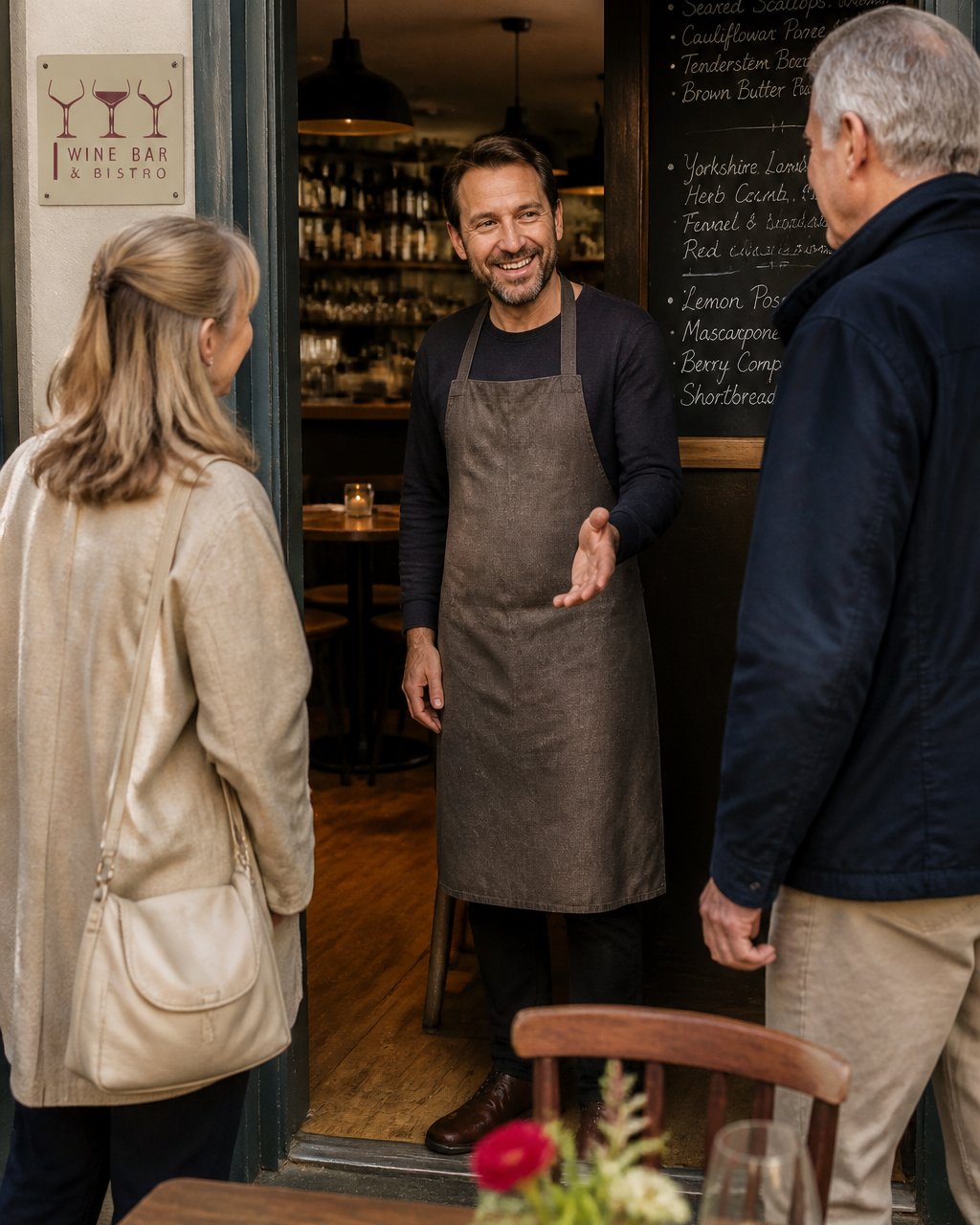
Family ownership is not a guarantee of quality. It is a guarantee of accountability. The owner is the person who feels it when the food is wrong, and that is the operational difference worth paying attention to.
Why an Independent Bistro Cooks Differently
An independent bistro cooks differently because the menu is set by the kitchen, not by a central office.
Slow-cooked dishes take time and cannot be rushed to order. A kitchen that owns its own menu can build the day around them.
What most guides miss is that this cuts both ways.
For diners with dietary requirements, independence usually helps. A small kitchen can adapt a dish on the spot in a way a fixed menu cannot.
The Benefits and Challenges of Family Ownership
Family ownership gives a venue continuity, accountability and a reason to care about its local reputation. It also brings pressure that a chain venue never faces.
The benefits:
- Decisions get made quickly by people who are present
- Local sourcing and community ties tend to run deeper
- Staff stay longer, so service feels familiar
- Money stays in the local economy
The challenges:
- Limited cover when someone is ill or on holiday
- No head office to absorb a bad year
- Emotional strain when family and work overlap
- Succession planning, which many owners avoid
Multi-Generational Continuity and Succession
Multi-generational continuity is what happens when a venue passes from one generation to the next, and it is the hardest part of family ownership to get right. Handovers go wrong when the next generation is not trained in the business, or when the outgoing owner will not let go.
Venues that manage it well tend to do three things: bring the next generation into daily operations early, keep written records of recipes and supplier terms, and agree the timing of the handover years in advance rather than in a crisis.
Conclusion: Spotting a Real Family-Owned Bistro
The test is simple. Check the public record, then check who is actually in the room.
Anyone can call themselves a bistro. Fewer can show you a director list with one family on it and the same faces on the floor a decade later.
At Plonkers Wine Bar, we have been family owned and run on the York riverside since the early 1980s, and we are completely independent and untied to suppliers or chains. We cook from locally sourced meat, fish and vegetables, keep a large selection of specialist beers, wines and spirits, and host regular live music and open mic nights.
Frequently Asked Questions
What makes a restaurant family-owned?
A restaurant is family-owned when the family holds the business and typically works in it, rather than owning it from a distance through a management company or investor group. Signs include family members on the rota, a surname on the signage, and decisions about the menu or suppliers made by the same people who greet you. A family-owned bistro can still employ staff who are not relatives. The ownership and daily presence are what count, not the size of the payroll.
How can you tell if a bistro is independently owned?
Check whether the venue is tied to a chain or supplier group. An independent bistro sets its own menu, chooses its own suppliers, and is not bound to a central brand list. Look for a single location, a named owner, and local sourcing you can ask about directly. Asking staff who owns the place and where the meat or fish comes from usually gives a clear answer, since independent owners tend to know their supply chain personally.
Does family-owned mean the family runs the restaurant day to day?
Not always, but in a genuine family-run restaurant it usually does. Some families own the freehold and lease the operation to a manager, which is family-owned on paper only. Day-to-day involvement looks like a family member opening up, cooking, or handling bookings. If you want to know which you are visiting, ask who is in the kitchen that evening. A hands-on answer is a good sign.
What is the difference between a family-owned bistro and a restaurant chain?
A chain follows a central menu, pricing, and supplier contracts across every site, so consistency comes from standardisation. A family-owned bistro makes those decisions locally, which means the menu changes with the seasons and the owner’s judgement. Chains often have deeper marketing budgets; independents rely on regulars and word of mouth. Neither is automatically better, but the experience and the money you spend stay far more local at a family-run venue.
If you want a bistro where the people who own it are the people who greet you, cook for you and remember your order, that is exactly what we do. Get started with Plonkers Wine Bar and book your table for dinner, a pre-theatre meal or a live music night.