Table of Contents
- Why Live Music Matters for Customer Retention
- How Live Music Shapes the Dining Experience and Customer Satisfaction
- Live Music and Customer Loyalty: Building Repeat Visits
- Restaurant Customer Retention Strategies That Work
- How to Measure Restaurant Customer Retention
- Restaurant Live Music Ideas for Every Venue
- Costs, Risks, and Getting Live Music Right
- Conclusion
- Frequently Asked Questions
Last Updated: October 17, 2026
Why Live Music Matters for Customer Retention
Live music is one of the few things a restaurant can offer that a customer cannot get from a takeaway app.
Customer retention in hospitality means getting the same guest to return, book again and bring friends. Live music supports that goal by giving people a reason to choose a specific night and a specific venue.
The thinking is simple. A pub quiz fills a Tuesday. A band fills a Saturday. Both give regulars a fixture in their diary, and a fixture is what turns a one-off visit into a habit.
Live music works as a retention tool because it creates a recurring reason to return. A guest who loved a night out remembers the evening, not just the menu.
How Live Music Shapes the Dining Experience and Customer Satisfaction
A small live band lifts the whole room. Diners clap between sets, talk to the table next to them and stay for one more drink.
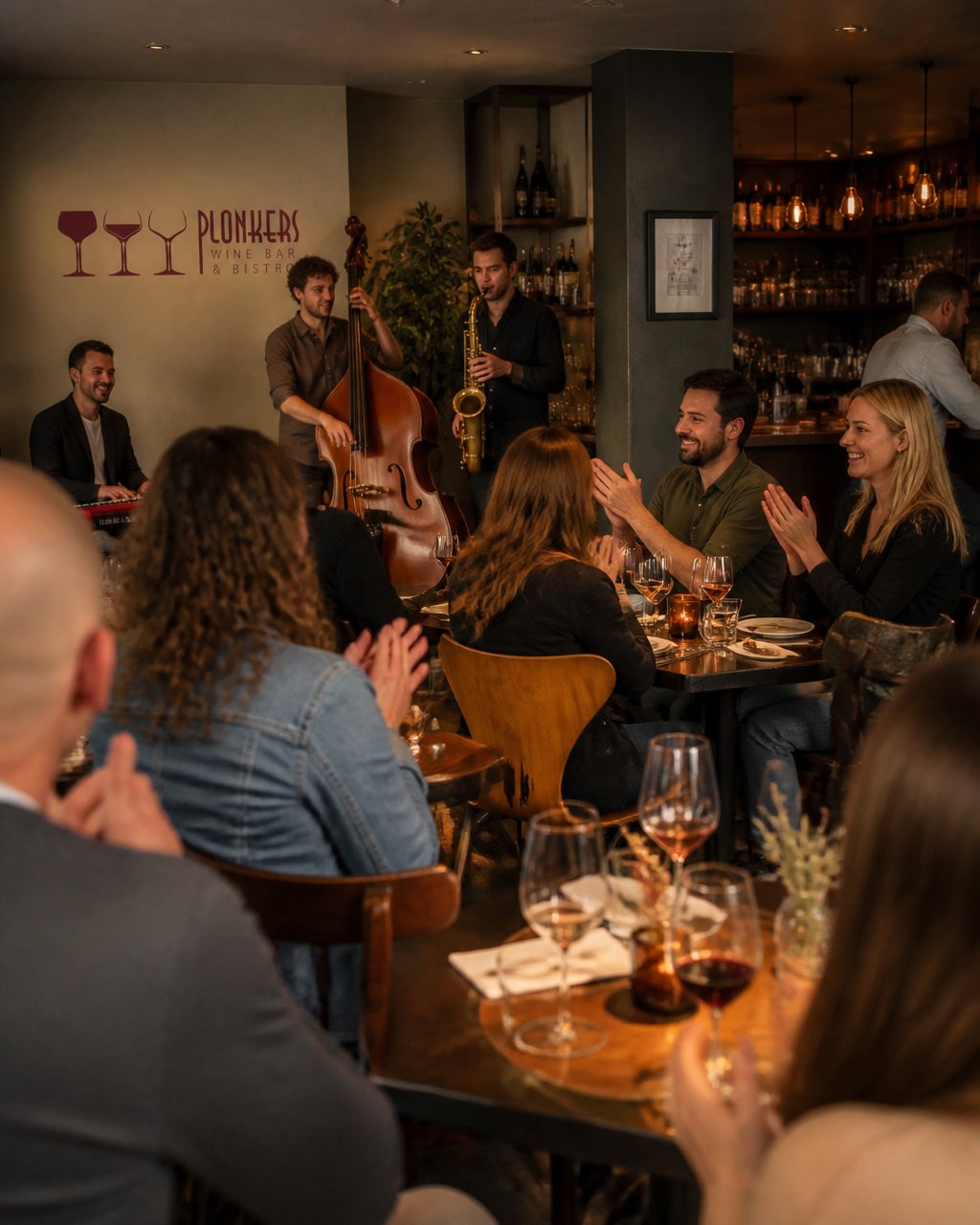
Customer satisfaction here is about more than food quality. It is the sound, the lighting, the pace of service and the sense that something is happening. Get the balance right and guests leave happy.
The practical point most guides miss is volume. A band that drowns out conversation kills the dining experience, no matter how good they are.
- Acoustic sets suit early evening dining
- Fuller bands work later, once the food service slows
- Give the performer a clear finish time so service stays predictable
Live Music and Customer Loyalty: Building Repeat Visits
Loyalty grows when guests can rely on a schedule. If someone knows the first Friday of the month means live music, they plan around it. That predictability is the real engine behind live music and customer loyalty.
A regular night builds a crowd of familiar faces. Regulars start recognising the performer and each other. That sense of belonging is what keeps a local venue busy through quiet months.
We have seen guests return specifically because they enjoyed the music on a previous visit, then book again for a birthday or a pre-theatre meal. The music opens the door; the whole experience keeps them coming back.
Announce your live music dates well ahead and keep them consistent. Guests who can plan around a fixed night are far more likely to return than those who have to check each time.
Restaurant Customer Retention Strategies That Work
The best restaurant customer retention strategies share one trait: they give guests a reason to come back soon. Live music is one lever. Pair it with a few others and the effect compounds.
Here is what we would focus on:
- Set a regular live music night so guests can plan around it
- Capture contact details at booking and invite guests back for the next event
- Reward regulars with a small thank-you on a return visit
- Ask for feedback after the night and act on it
- Match the music to the crowd rather than to personal taste
- Keep service fast during sets so the night flows
The common mistake is treating live music as a one-off gimmick. A single gig brings a crowd once. A monthly fixture builds a following.
How to Measure Restaurant Customer Retention
Most guides stop at “track repeat bookings”. That is not a measurement framework, it is a single metric. To know whether live music actually drives retention, you need to compare live-music nights against comparable control nights and separate correlation from causation.
Start by defining retention precisely. For a restaurant, a workable definition is the share of first-time or lapsed guests who return within a fixed window, commonly 60 or 90 days. Pick one window and stick to it, otherwise the number moves for reasons that have nothing to do with the music. Consistency in these metrics allows operators to isolate the impact of soundscapes while simultaneously enhancing restaurant atmosphere through the thoughtful placement of visual elements.
Build a control-night comparison
A control night is a night with the same day of week, similar season and similar menu, but no live music. Compare like with like:
| Metric | Live-music night | Control night | What it tells you |
|---|---|---|---|
| Covers | Total seated | Total seated | Raw pull of the programme |
| Repeat bookings within 90 days | Share of guests who rebook | Share who rebook | Whether the night creates habit |
| Average dwell time | Seating to departure | Seating to departure | Whether guests stay for another course or drink |
| Spend per head | Total spend ÷ covers | Total spend ÷ covers | Incremental revenue per guest |
| Contribution margin | Revenue minus food, drink and variable staff cost | Same | Whether the night actually pays |
| Feedback score | Short post-visit survey | Same survey | Whether the music helped or hurt |
Run the comparison for at least eight to twelve weeks before drawing conclusions. One good Saturday proves nothing; a consistent pattern across a quarter is evidence.
Separate correlation from causation
A busy live-music night may simply be a Friday. To isolate the music’s effect, rotate the programme: hold the same night of the week, alternate live and recorded music, and compare. If repeat bookings rise only on live nights, the music is doing work. If they rise on both, you are seeing a day-of-week effect.
Track the retention cohort, not just the night
The most useful number is the return rate of guests who attended a live-music night versus guests who did not. A simple booking log with a “how did you hear about us” and “was this your first visit” field is enough to build this. Review monthly, and adjust the programme based on what the cohort data shows rather than on how busy the room felt.
Define your retention window before you start. Switching from 60 to 90 days mid-quarter will make a flat programme look like a success.
You do not need complex software. A booking log, a short feedback form and a spreadsheet will tell you most of what you need, provided you compare against a control and measure contribution margin, not just covers.
Restaurant Live Music Ideas for Every Venue
The right restaurant live music ideas depend on the room, the crowd and the night. A tiny wine bar and a large function space need very different setups.
- Open mic nights for a relaxed midweek crowd
- Acoustic duos for early evening dining
- Jazz trios for a slower, grown-up atmosphere
- Local bands for weekend energy
- Seasonal events tied to the Christmas market or theatre nights
- Private party sets for group celebrations
The key is matching the music to the venue. A loud band in a small room overwhelms guests. A quiet solo act in a big space gets lost. Choose the act to fit the room, not the other way around.
Booking a band without checking the room’s sound limits is a common and costly mistake. A set that is too loud drives guests out early and can lead to complaints. Test the volume before the night.
Costs, Risks, and Getting Live Music Right
Live music is an investment, and it needs to pay for itself. Treating the performer fee as marketing spend is fine, but only if you know what return you are buying. Work through the costs, the break-even maths and the segments who will not thank you for a band.
What live music actually costs
Budget across five lines, not just the act:
- Performer fees, solo acoustic acts, duos and trios sit at different price points; get at least two quotes per slot and confirm whether the fee includes PA and lighting.
- Licensing, recorded music in a public venue needs a licence from PPL PRS. Live performance has separate considerations, so confirm what your venue needs before booking.
- Staffing, door staff, extra bar cover during sets, and someone to manage sound checks.
- Equipment, PA hire, microphones, stands and cabling if the act does not bring its own.
- Promotion, printing, social posts and any paid promotion for the night.
Break-even in practice
Break-even is straightforward once you have the numbers. Add the total cost of the night, then divide by your contribution margin per cover (spend per head minus food, drink and variable staff cost). The result is the number of extra covers you need just to cover the music.
For example, if a night costs £250 all-in and your contribution margin is £12 per cover, you need roughly 21 extra covers to break even. Anything above that is upside. If the act also lifts dwell time and guests stay for an extra drink, the effective margin per cover rises and the break-even point falls.
The risks worth planning for
- Noise complaints from neighbours, especially where the venue sits close to residential property.
- Licensing and safety, amplified music, public events and late hours can each trigger conditions. Confirm the details with your council before the first night.
- Performer no-shows, keep a backup act or a recorded-music fallback so the night still runs.
- Volume creep, a set that starts well and gets louder as the room fills drives guests out early.
Not every guest wants live music
Live music is not universally welcome. Some guests come for conversation, and a band can make a table of four impossible to hear. Others have noise sensitivity or accessibility needs, and families with young children may avoid late, loud sets. The practical answer is to segment: keep early-evening sets acoustic and low-volume, reserve fuller bands for later slots, and make it clear on the booking page which nights are lively and which are quiet. That way the programme attracts the crowd it suits rather than driving away the guests it does not.
Check your licensing position and sound limits before the first night. A set that breaches a condition can cost more than the act’s fee.
Independent venues with a regular crowd and a room that suits acoustic or small-band sets, where a monthly fixture can build a loyal following without overwhelming the core dining trade.
Conclusion
Building a loyal crowd takes more than good food. It takes a reason to return, and live music gives guests exactly that. The venues that get it right treat music as part of the whole experience, measure the results and adjust as they go.
At Plonkers Wine Bar, we have built our evenings around that idea. Our family-run, independent bistro on the riverside pairs home-cooked, locally sourced food with a large selection of specialist beers, wines and spirits, plus regular live music and open mic nights. If you want a night out worth repeating, book a table and see for yourself.
Frequently Asked Questions
Does live music make restaurant customers more likely to return?
Live music can encourage repeat visits when it is part of a consistent, well-run programme. Customers who associate a venue with enjoyable evenings and a distinctive atmosphere are more likely to come back. The key is regularity and quality: a weekly open mic night or a monthly jazz session gives people a reason to return. Tracking booking sources and asking new customers how they heard about you helps confirm whether live music is driving customer retention.
How can restaurants measure whether live music is bringing customers back?
Start by comparing covers and spend on live music nights against quieter evenings. Use booking systems to flag which customers attended a music event, then track how often they return over the following three to six months. Simple feedback cards or a short post-visit email asking why they chose the venue also reveal whether the music was the draw. Look at repeat visit rates for music-night attendees versus other guests to see the effect on customer retention.
What type of live music works best in a restaurant?
The best genre depends on your venue and audience. Acoustic sets, jazz trios, and singer-songwriters suit intimate dining rooms where conversation matters. Upbeat bands work for bars and late-night settings. Match the tempo and volume to the dining pace you want: slow-paced music encourages longer dwell time, while uptempo sets can lift energy. Test different styles on different nights and watch how customer satisfaction and spending respond.
How often should a restaurant host live music?
Consistency beats frequency. A regular weekly slot, such as a Thursday open mic or a Saturday evening set, builds anticipation and helps customers plan repeat visits. Monthly events can work for larger themed nights. Avoid sporadic scheduling, which makes it hard for customers to build a habit. Consider your operational capacity too: staff, sound limits, and licensing all affect how often you can run live performance without disrupting the guest experience.
Ready to make your next night out a regular one? Book with Plonkers Wine Bar and enjoy home-cooked food, a proper drinks list and live music in a warm, independent setting. Get started with Plonkers Wine Bar and make your next visit the first of many.