
Table of Contents
- What Are You Actually Paying For at a Professional Restaurant?
- The Value of Locally Sourced Ingredients on Your Plate
- The Benefits of Independent Dining Over Chain Restaurants
- How to Weigh the Cost of Professional Dining
- Private Dining Room Hire Costs: Is a Premium Worth It?
- Signs of Genuine Culinary Craftsmanship and Service
- The Verdict: When Professional Dining Is Worth the Cost
- Frequently Asked Questions
Last Updated: September 6, 2026
What Are You Actually Paying For at a Professional Restaurant?
Professional dining is the experience of eating food prepared and served to a standard that goes beyond simple sustenance, encompassing culinary craftsmanship, service excellence, and atmosphere. When you ask whether professional dining is worth the cost, you are really weighing a meal against a collection of goods that includes technique, hospitality, and environment rather than just ingredients. The bill at an independent bistro covers skilled labour, rent on a prime location, and the risk of fresh produce that does not keep, none of which appear on a chain menu’s spreadsheet in the same way.
At Plonkers Wine Bar, we have served the York riverside since the early 1980s, and we understand that value is judged plate by plate. The core question is not whether restaurants are expensive, but whether the premium buys something you notice and remember. A kitchen that butchers its own meat and bakes its own bread delivers a fundamentally different product from one that reheats pre-portioned deliveries.
The Value of Locally Sourced Ingredients on Your Plate
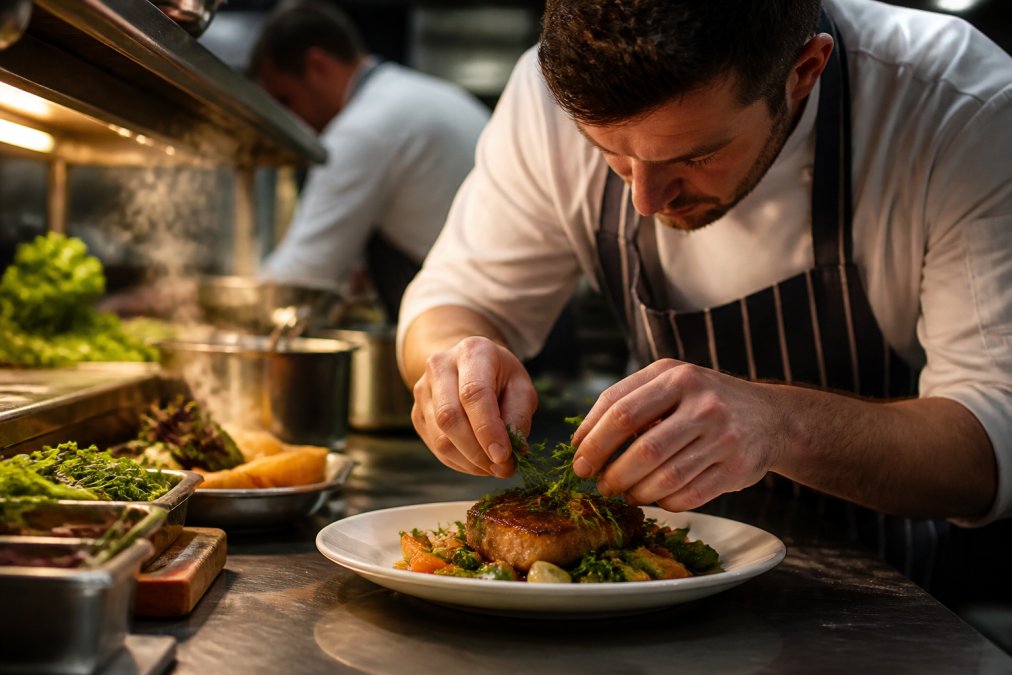
The value of locally sourced ingredients shows up in freshness, seasonality, and flavour intensity that cannot be faked. When a restaurant buys from nearby farms, the produce travels a fraction of the distance of supermarket stock, so it can be picked riper and served sooner. This short supply chain also means the menu changes with the seasons, which rewards regular customers who eat with the calendar.
Local sourcing also carries an ethical and economic dimension that many diners now weigh alongside taste. Spending with an independent kitchen supports regional growers and producers, keeping money inside the local economy rather than consolidating it with national distributors. Many customers find that a meal built on ingredients with a known origin simply tastes more considered, because the chef is cooking with constraints and relationships, not just a price list.
Ask where the meat and fish come from before you book. A restaurant that names its farms and its butcher is usually the one doing the work itself, rather than buying ready-made sauces and pre-cut proteins from a catering supplier.
The Benefits of Independent Dining Over Chain Restaurants
The benefits of independent dining over chain restaurants centre on consistency of character, not consistency of formula. A chain succeeds by delivering the identical burger in every city, which requires centralised supply chains and standardised recipes that leave no room for a chef’s judgement. An independent venue succeeds by being itself, with a menu shaped by the building, the season, and the person actually cooking that night.
Independence also changes how a business handles problems. A family-run operation has its reputation tied to every table, so dietary requirements and special occasions tend to get genuine attention rather than scripted responses. At Plonkers Wine Bar, our complete independence from suppliers and chains means we choose our own meat, fish, and vegetables, and we pour local beers and spirits because we believe they are better, not because a contract demands it.
How to Weigh the Cost of Professional Dining
Weighing the cost of professional dining requires a structured framework that accounts for your personal context, not just a simple price comparison. The most effective approach is to segment the decision by occasion, as the value equation shifts dramatically depending on whether you are eating out on a random Tuesday or celebrating a milestone.
A Framework for Different Dining Occasions
The Casual Weekday Meal: Here, the benchmark is not a home-cooked equivalent but the cost of a supermarket meal deal or a takeaway. A £15 main course at an independent bistro is justifiable if it saves you 45 minutes of cooking and cleaning, and if the quality is noticeably superior to a £5 meal deal (Iowa State University Extension and Outreach(https://www.extension.iastate.edu/humansciences/home-food-operations)). The value evaporates if the food is merely competent; for routine dining, you are paying for convenience and a pleasant environment, not culinary artistry.
The Business Lunch: The calculus here is different. The meal is a tool for relationship building. The cost is often tax-deductible, and the value is measured in the quality of the conversation and the impression you make. A private room or a quiet corner table, attentive but unobtrusive service, and a wine list with options at multiple price points are worth a premium because they facilitate the meeting’s purpose. A noisy, cramped chain restaurant would be a poor value, regardless of the bill.
The Celebration: This is where the ‘memory dividend’ applies. You are not paying for food; you are paying for a memory that will be retold. The value is measured in the emotional return. A £100 per head tasting menu at a Michelin-starred restaurant is worth it if it creates a shared experience that you and your guests will discuss for years. The key is to align the venue with the celebrant’s tastes. A foodie will value a chef’s counter experience; a non-foodie might value a stunning view and impeccable service more than a complex dish.
The ‘Experience ROI’ Calculator
A practical tool is to calculate the ‘cost per memorable moment’. Before you book, list what you expect to remember from the meal in 48 hours. If the list is empty, the meal is likely to be forgettable. If you can anticipate three or four specific moments, a perfectly executed dish, a surprising wine pairing, a stunning view, a piece of hospitality that made you feel special, then the cost per moment becomes a more meaningful metric than the total bill.
The Real Cost of a ‘Cheap’ Meal
It is also worth considering the hidden costs of a poor-value meal. A disappointing dinner often leads to a second stop for food afterwards, or a round of drinks elsewhere to salvage the evening. The true cost of a mediocre meal is not just the bill, but the wasted evening and the subsequent spending to fix it. A slightly more expensive meal that is genuinely satisfying is often the more economical choice. organic food costs(https://lovinglifeclothing1.com/blogs/news/is-organic-food-worth-the-cost).
Beware of the ‘sunk cost’ fallacy. If you have already spent £40 on a main course that is not delivering, do not order a £15 dessert to ‘make up for it’. Cut your losses, pay the bill, and go elsewhere for a coffee or a drink. The additional spend only deepens the regret.
The Psychology of Spending on a Meal Out
The psychology of spending on a meal out is rarely rational, because you are buying an experience and a memory, not just calories. Discretionary spending on dining feels different from buying groceries, since the money converts into an evening rather than a weekly shop. Many people find that the same amount feels extravagant for a Tuesday dinner but entirely justified for a birthday, which shows that context, not the dish, drives the perception of value.
When Post-Meal Regret Happens and How to Avoid It
Post-meal regret happens when the bill exceeds the memory, usually because the price point promised more than the plate delivered. Avoiding it comes down to research and honest expectations: check recent reviews, ask about portion sizes, and be clear about whether you want a tasting menu or a generous main. A restaurant that is transparent about its sourcing and its cooking methods is far less likely to disappoint than one that relies on vague marketing language.
Private Dining Room Hire Costs: Is a Premium Worth It?
Private dining room hire costs are worth the premium when the gathering has a purpose that a public dining room cannot serve. For events of six to 130 people, a dedicated space provides guaranteed seating, a set menu agreed in advance, and the freedom for guests to talk without competing with the main room. The hire fee effectively buys you control over the experience, from the timing of courses to the choice of music.
The value depends heavily on the venue’s flexibility. A room that simply cordons off part of the restaurant may not justify a large supplement, whereas a space with its own character and attentive staffing can turn a group meal into the centrepiece of an occasion. For celebrations where the conversation matters as much as the food, the certainty of a private space often outweighs the extra cost.
Signs of Genuine Culinary Craftsmanship and Service
Genuine culinary craftsmanship reveals itself in small, consistent details rather than dramatic flourishes. Look for menus that change with the seasons, sauces made from scratch, and vegetables that are not uniform in size because they came from a real farm. A kitchen that cures its own fish or makes its own desserts is demonstrating a commitment that pre-prepared alternatives cannot match.
Service excellence follows a similar pattern. Attentive staff who can describe how a dish is cooked, who notice a refill before you ask, and who handle dietary requirements with confidence rather than hesitation, signal a team that is trained and cared for. Hospitality standards at this level are the difference between a meal you eat and an evening you remember, which is precisely where the cost of professional dining finds its justification.
The Verdict: When Professional Dining Is Worth the Cost
Professional dining is worth the cost when the experience delivers something you cannot recreate at home and when the venue earns your trust through consistency. It is not worth it when you simply want fuel, or when a restaurant charges premium prices without the craftsmanship to back them up. The most reliable way to judge is to start with a venue’s values: independent ownership, named local suppliers, and a kitchen that does its own work are the strongest signals of a meal worth its price.
For a regular weeknight dinner or a special celebration in York, the answer comes down to choosing a place that respects your money. At Plonkers Wine Bar, we have built our reputation on home-cooked food from locally sourced meat, fish, and vegetables, served in a riverside setting that has welcomed guests since the early 1980s. Our regular live music and open mic nights add a layer of atmosphere that a chain simply cannot replicate.
The challenge is separating genuine value from marketing gloss. The solution is to support kitchens that are transparent about their sourcing and proud of their independence.
Frequently Asked Questions
What factors define a high-quality professional dining experience?
A high-quality professional dining experience comes down to a few measurable factors: the skill of the kitchen, the freshness of ingredients, and the consistency of service. Look for restaurants that cook from scratch and change menus seasonally. The atmosphere also plays a role, but it should complement the food, not mask it. When staff can explain where meat or fish comes from and how it is prepared, that signals genuine care. For a reliable benchmark, try an independent venue where the owner is present and accountable for every plate.
How does locally sourced produce impact the value of a meal?
Locally sourced produce directly affects freshness and flavour, which is why it often costs more. Ingredients that travel shorter distances spend less time in storage, so they retain more taste and texture. Buying local also supports the regional economy and reduces the environmental footprint of your meal. When a restaurant names its suppliers, you are paying for traceability and relationships, not just food. That transparency is a strong indicator of quality and a key reason professional dining can offer better value than a cheaper chain alternative.
Is private dining worth the additional cost for special occasions?
Private dining makes sense when you value exclusivity, a tailored menu, and undivided attention for your group. The cost typically covers a dedicated space, a set menu designed in advance, and a service team focused solely on your event. For celebrations like milestone birthdays or business gatherings, that premium removes the stress of coordinating a large booking in a busy public room. Before committing, ask what is included, such as a drinks package or room hire fee, and whether the minimum spend works for your guest count.
Why do professional restaurants cost more than chains, and is the difference justified?
Independent professional restaurants pay more for higher-grade ingredients, skilled chefs, and experienced front-of-house staff, often with smaller economies of scale than chains. That difference shows up in the cooking technique, portion quality, and level of service. A chain can offer lower prices by centralising supply and standardising recipes, but that often means pre-prepared components and less flexibility. Whether the premium is justified depends on what you value: if consistency at a low price point matters most, a chain works. If you want originality and genuine hospitality, the extra cost is usually worth it.
Professional dining rewards those who eat with intention, choosing venues where the craftsmanship justifies the bill. At Plonkers Wine Bar, our family-run riverside bistro pairs high-quality home-cooked food with specialist beers, wines, and spirits from local makers, all served with the warmth of an independent house. Book your table and taste the difference that genuine hospitality makes.