
Table of Contents
- Why Quieter Alternatives to Loud Concert Halls in York Are Worth Finding
- What Makes an Intimate Live Music Venue Different
- Live Music and Dining: Combining Both in One Evening
- Sensory-Friendly and Quiet Performance Spaces
- How to Check Noise Levels and Atmosphere Before You Book
- Getting There: Transport and Accessibility for Quieter Venues
- Frequently Asked Questions
Last Updated: September 16, 2026
Why Quieter Alternatives to Loud Concert Halls in York Are Worth Finding
A growing number of music lovers are seeking out alternatives to loud concert halls in York, venues where you can hear every note without shouting over it afterwards. This guide from Plonkers Wine Bar maps the city’s quieter options: intimate rooms, acoustic sets, and spaces built for listening rather than volume.
The shift is easy to understand. Traditional concert halls prioritise scale and spectacle, which often means amplified sound, tiered seating, and a crowd of hundreds. Quieter alternatives flip that model. They trade capacity for closeness, and in doing so they change how a performance feels. Below, we break down what separates an intimate venue from a large auditorium, how to check noise levels before you book, and which practical details, from transport to accessibility, actually matter on the night.
The best quiet gig is not simply a smaller version of a big one. It is a different listening experience altogether, built around acoustics, proximity, and atmosphere rather than volume.
What Makes an Intimate Live Music Venue Different
An intimate live music venue is a small-capacity space, typically seating or standing under 150 people, where the audience sits close enough to the performer to hear unamplified or lightly amplified sound. The room, not the speaker stack, does most of the acoustic work.
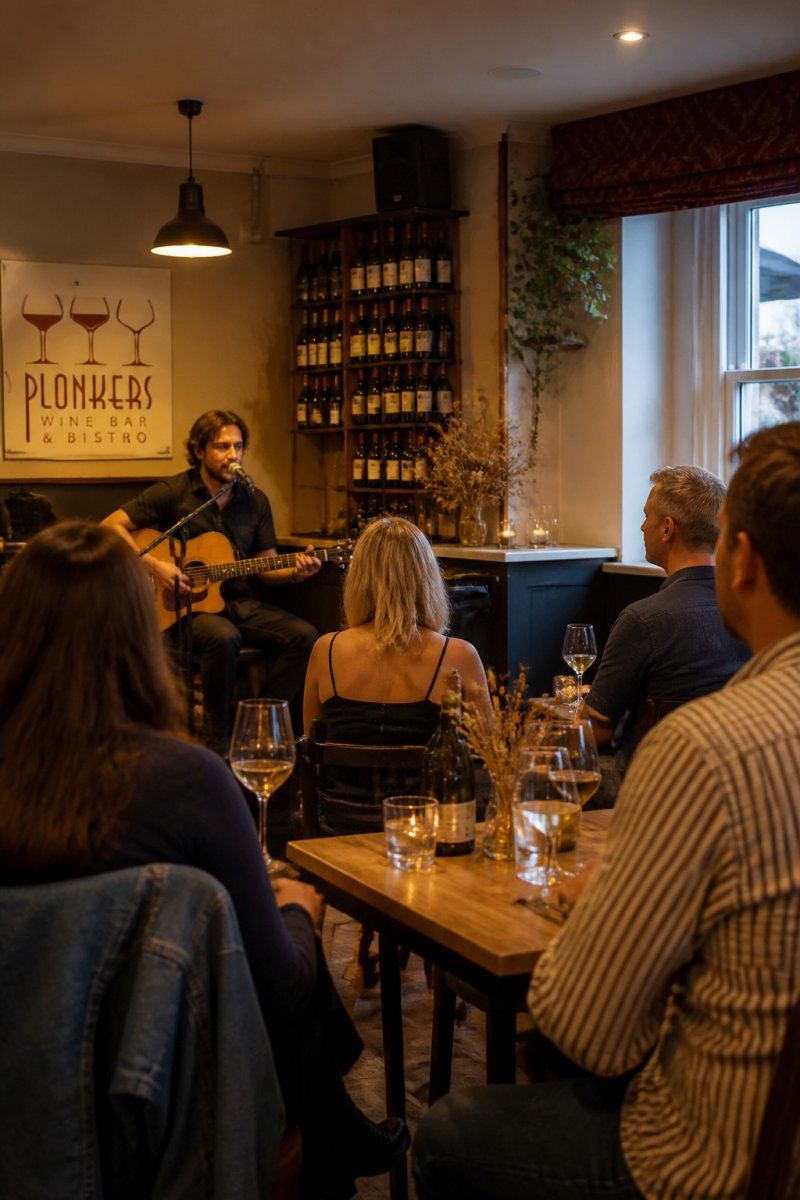
That distinction matters more than most people realise. In a large hall, sound engineering exists to push audio to the back row. In a small room, the performance facilities are simpler: a modest PA, a low stage, and soft furnishings that absorb harsh frequencies. The result is a warmer soundscape where vocal performance and instrumental detail come through clearly.
Capacity bands are a useful shorthand when you are comparing rooms. These are working ranges rather than fixed rules, but they hold across most small venues:
| Capacity band | Typical format | What it means for volume |
|---|---|---|
| Under 50 | Bistro, wine bar, listening room | Conversational levels, often unamplified |
| 50-150 | Small club, upstairs room, church hall | Light PA, acoustic-first line-ups |
| 150-400 | Mid-size hall, studio theatre | Full PA, but still close sightlines |
| 400+ | Concert hall, theatre | Amplified, tiered, designed for scale |
The jump from the first two bands to the last two is where the listening experience changes most. Below roughly 150 people, a performer can project to the back of the room without a PA doing the heavy lifting. Above that, reinforcement becomes necessary, and the room starts to sound like a system rather than a space.
Acoustic Performance vs Amplified Sound
Acoustic performance relies on the natural projection of instruments and voices, with minimal or no electronic reinforcement. Amplified sound, by contrast, runs everything through a PA system, which suits touring concerts and large audiences but can flatten dynamic range.
The mechanism is worth understanding because it explains why small rooms feel quieter even when the music is loud. In an amplified setting, the PA has to overcome the room’s size and the noise floor of a large crowd, so engineers push levels up. In a small room, the same instruments need far less gain to reach the back wall. Lower gain means less compression, which preserves the quiet passages that make a performance feel dynamic rather than relentless.
Room features do the rest. Soft furnishings, curtains, carpet, and a low or absent ceiling absorb high frequencies and reduce the harsh reflections that make amplified sound fatiguing. Hard surfaces, bare brick, glass, high ceilings, do the opposite, which is why a converted warehouse can feel louder than its size suggests.
For listeners, the practical difference shows up in noise levels. An unplugged set in a small room rarely needs the volume that an amplified gig does, so conversations between sets stay easy and ears do not ring on the way home. Chamber music, folk, jazz, and recital-style performances tend to suit these rooms best, though plenty of amplified acts play them too, just at lower levels.
A simple way to judge a room before you go is to look at what it advertises. ‘Unplugged’, ‘acoustic set’, ‘listening room’, and ‘open mic’ all signal a quieter format. ‘Full band’, ‘tour’, and ‘live show’ usually mean a PA is in play. Neither is better, they are simply different listening experiences, and the quieter one is the point of this guide.
Below roughly 150 capacity, the room does the acoustic work. Above it, the PA does. That single threshold explains most of the difference in volume between a bistro gig and a concert hall.
Live Music and Dining: Combining Both in One Evening
Combining live music and dining works best when the venue treats the performance as part of the meal rather than a separate event. A room that serves food and hosts musicians on the same evening lets guests eat, drink, and listen without moving between locations.
That format suits a certain kind of night out. You are not committing to a full concert experience with a fixed start time and a ticket barrier. You arrive, order, and the music unfolds around the table. Many venues schedule regular slots, from open mic nights to weekend sets, so it pays to check what is on before you go.
Plonkers Wine Bar, a family-owned bistro on the riverside that has been running since the early 1980s, hosts regular live music and open mic events alongside its food and drink menu.
Ask whether the music is a scheduled set or background ambience. Venues that host dedicated open mic nights and weekend gigs publish a line-up; places using music as atmosphere usually do not.
Sensory-Friendly and Quiet Performance Spaces
Sensory-friendly performance spaces are venues that manage sound, lighting, and crowd density to suit people who find conventional gigs overwhelming. That includes lower volumes, softer lighting, and the freedom to step away from the room without missing the whole event.
- A capacity small enough that you can see the exits from most seats
- Seating rather than standing-only floors, so you can sit through a full set
- Music at conversational volume rather than gig volume
- Staff who can tell you in advance what the evening will involve
How to Check Noise Levels and Atmosphere Before You Book
Checking noise levels before you book comes down to asking the right questions and reading the room’s signals online. Most venues will tell you plainly what kind of night it is if you ask.
| What You Want | What to Ask | What It Tells You |
|---|---|---|
| A quiet listening room | Is the set acoustic or amplified? | Whether to expect a PA or natural sound |
| A table for a group | What is your maximum group size? | Whether the space fits your party |
| A relaxed evening | Is there a fixed start time? | Whether you can arrive and settle in |
| A calm environment | How loud does it get at peak? | Whether it suits sensory needs |
| A full night out | Do you serve food during sets? | Whether dining and music overlap |
Do not assume “live music” means a full band. Some venues list music that turns out to be low-level background audio. If a proper performance matters to you, confirm the format before you travel.
Getting There: Transport and Accessibility for Quieter Venues
Transport and accessibility decide whether a quiet venue is genuinely usable, not just appealing on paper. Small independent spaces are often tucked away from main routes, so plan the journey before the night. This is the section most venue guides skip entirely, they list the room and leave you to work out the rest.
A quick checklist before you commit:
- Confirm the nearest bus stop or station and the walk time
- Check whether the entrance has steps or level access
- Ask whether the performance room is on the ground floor
- Ask about accessible seating and whether a companion seat is available
- Check whether there is a quieter area to step away to if the room gets busy
- Look at parking options only if public transport is not practical
- Check the route after dark if you are unfamiliar with the area
If you have access needs, phone the venue rather than relying on the website. Small independent spaces often have step-free routes or seating arrangements that are not listed online but can be arranged in advance.
Frequently Asked Questions
What are the best small music venues in York for a relaxed evening?
York has several small venues that focus on comfort and sound quality rather than volume. Look for places with tiered seating or cabaret-style tables, a capacity under 150, and a programme that includes acoustic performance, folk, jazz or chamber music. Independent bars and bistros often host regular unplugged nights where you can hear every note without shouting over a PA. Check listings for grassroots events and open mic evenings, which tend to be quieter and more intimate than touring concerts.
How do I find local acoustic music nights in York?
Start with social media pages of independent venues and local musicians. Many York bars and bistros post weekly line-ups for open mic nights and acoustic sessions. You can also ask staff at smaller venues directly, as they often know which nights are quietest. Look for terms like ‘unplugged’, ‘acoustic showcase’ or ‘intimate gig’ in event descriptions. Grassroots listings and community noticeboards in the city centre are another good source for local artists performing in relaxed settings.
Where can I enjoy live music alongside high-quality food?
Several independent bistros and wine bars in York combine live music with dining. These venues typically host acoustic acts or small jazz ensembles during meal service, so the sound stays at conversation level. The best ones offer locally sourced menus and a separate performance area or a corner stage. Booking a table in advance is wise, especially for weekend evenings when live music and dining are most popular. Ask about the volume and style of music when you reserve.
Are there venues that offer a quieter atmosphere for live performances?
Yes. Sensory-friendly and quiet performance spaces exist in York, often in smaller halls, community centres or independent venues. These spaces usually have capacity under 200, use acoustic or lightly amplified sound, and may offer chill-out areas. Some venues also run dedicated quiet nights or early-evening sets for those who prefer lower noise levels. It is worth calling ahead to ask about ambient noise, seating layout and whether the event is amplified or unplugged.